Seven Minutes, Not Ninety
Water polo looks like a full-length team sport and behaves nothing like one, and the reason is the clock.
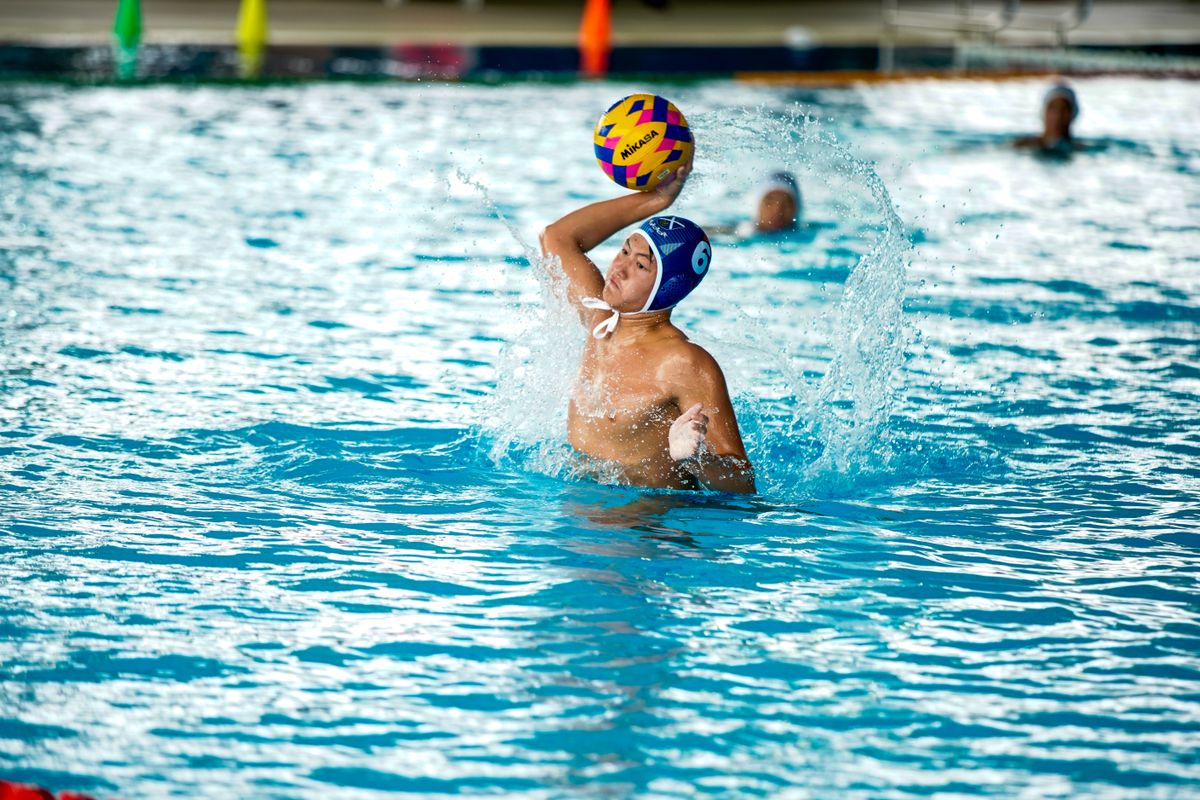
In water polo the clock runs during stoppages, not only during play, so a match that takes roughly half an hour of wall clock time contains far less actual play than that suggests. Possessions are limited, and a team that gets a good shooting position scores a high proportion of the time.
The result is a scoring distribution that is wide, fast and unusually sensitive to a small number of events. Our basketball guide covers the comparable problem of a short, high-scoring game where a single run changes the shape of the contest.
Water Polo Markets and Their Behaviour
Because the margin is small and the number of possessions is limited, totals and handicaps describe the game better than the winner.
The exclusion ball is the only genuinely repeatable event in the sport.
| Market | Predictability | Main input | Note |
|---|---|---|---|
| Total goals | High | Both teams' scoring rates | Best fit for this sport |
| Goal handicap | High | Relative team strength | Better than the winner |
| Match winner | Medium | Draw record at 2m | Small sample per game |
| Man-down goal | High | Exclusion efficiency | Narrow and repeatable |
| Top scorer | Low-medium | One player's share | Coverage is thin |
The Exclusion Ball Is the Set Piece
Water polo has one genuinely repeatable high-percentage scoring situation, and it is not the penalty shot.
After a foul, the fouled team plays a man up. One attacker becomes the shooter, positioned outside the goal area, with a defender attempting to block the shot. The conversion rate from that position is high and reasonably consistent, and it is the closest the sport comes to a structured set piece.
The two-metre penalty is a better-known but less frequent chance. A team that draws frequent exclusions and converts them at an above-average rate will outscore a team that does not, and both figures are recoverable from match statistics. Our field hockey guide covers the same idea in a different code.
Why Halftime Is a Genuinely Different Position
A team leading at halftime in water polo is in a weaker position than the same scoreline would suggest in football, and bettors consistently overvalue it.
The reason is that water polo scoring is period-dependent. Defences are more effective early, and the scoring rate typically rises in the final period as players tire, exclusions become harder to contest in the water, and the goalkeeper has less ability to recover. A two-goal halftime lead is materially weaker than the same lead at the end of a football match.
Fatigue and Why the Final Period Is Different
The scoring distribution in water polo is not flat across four periods, and the pattern is consistent enough to trade.
Two forces drive it. Physical fatigue reduces the effectiveness of defensive positioning, because swimming against the current while tracking an attacker is genuinely exhausting. And exclusions accumulate, because tired players foul more, and a man-up situation late in a period is far more dangerous than one early.
The practical implication is that halftime totals are systematically over-priced on a game expected to open up. If both defences are expected to tire, the second-half total is more likely than the first-half line suggests, and that is a genuine, repeatable adjustment rather than an opinion.
A Sensible Routine
Water polo rewards a small number of specific checks, and the sport's low profile means they are rarely done.
Check both teams' scoring rates, which is the primary input for a total. Check exclusion counts and conversion, which is the most repeatable skill signal. Check the first-period total against the expected pace, because an unusually high first period usually signals open defences rather than an outlier.
Prefer totals and handicaps to the match winner, and treat any player prop with a wide margin sceptically. Our the handicap guide covers the reasoning, and the limits guide is worth reading because a niche-sport approach is easy to over-expose.
- Both scoring rates drive the total
- Exclusion conversion, the real skill signal
- First period, an unusual opener means open defences
- Prefer totals and handicaps to the winner
- Be careful with thin player props, wide margins
- Set limits with our tools guide
Scoring Distribution and Why the Third Period Is Everything
Water polo scoring is strongly period-dependent, and the pattern is consistent enough to be worth stating precisely.
The scoring rate typically increases across the four periods. The reasons are physical: defenders tire in the water, exclusions are harder to contest late in a period, and the goalkeeper has less time to recover toward the goal line as the attack is sustained.
The practical consequence is that a halftime total is systematically underpriced relative to the second half when both defences are expected to tire. That is a real, repeatable adjustment rather than an opinion, and it is the one genuinely exploitable feature of the sport's structure.
Our the basketball guide covers the same phenomenon in a different scoring environment, and the totals guide covers the arithmetic.
The Power Play Is the Only Repeating Event
Almost everything in water polo is situational, and exactly one thing is repeatable, which makes it disproportionately valuable to a bettor.
The man-up situation after an exclusion is a defined set-piece with a known conversion rate. Two specific arrangements exist. The 2m penalty, taken from two metres with the goalkeeper in goal, and the 5m shot where a shooter plays from five metres and must shoot on the signal.
Both have broadly consistent conversion rates, and both are recorded publicly for elite competitions. A team that draws frequent exclusions and converts them at an above-average rate will outscore a team that does not, and both inputs are in the match statistics.
Our the ice hockey guide covers the same concept through the power play, and the field hockey guide through the penalty corner.
Why Player Props Are Scarce Here
Water polo has one of the most concentrated scoring distributions in any team sport, and the betting coverage does not reflect it.
A typical match contains a small number of goals, and a single player can account for a large share of them. In a twelve-goal match, a leading scorer frequently has three or four, which means a top scorer market has a genuinely narrow field.
That should make top scorer one of the more analysable props available, and in principle it is. The problem is coverage: most bookmakers offer few or no water polo props, and where offered they carry a wide margin. A bettor with a genuine read on a leading scorer is frequently unable to express it at a fair price.
Goalkeeper and the Margin That Decides It
One position in water polo has an outsized effect on the scoreline, and it is the most under-priced input in the sport.
The goalkeeper faces more shots than in any other team sport because the possession count is high and the shot volume follows from it. A goalkeeper who saves above the league average changes the scoring rate for the entire match rather than for individual possessions.
Goalkeeper save percentage is a public statistic and it is one of the most predictive inputs available. A team with a top-quartile goalkeeper will win closer games than a team with an average one even where everything else is equal, and it is rarely reflected in the price. Our the handicap guide covers why that makes the handicap the right market.
Team Strength and How It Is Actually Measured
There is one public input in water polo that predicts team strength better than any other, and it is frequently overlooked.
Man-up conversion — the proportion of exclusion opportunities converted into goals — is the closest the sport has to a power-play metric, and it separates good teams from average ones very clearly.
A team that draws frequent exclusions and converts them will outscore a team that draws the same number and does not, and the difference over a match is typically two to three goals. Both inputs are in the match statistics, and neither appears in most pre-match analysis. Our the handicap guide covers why that makes the handicap the right market.