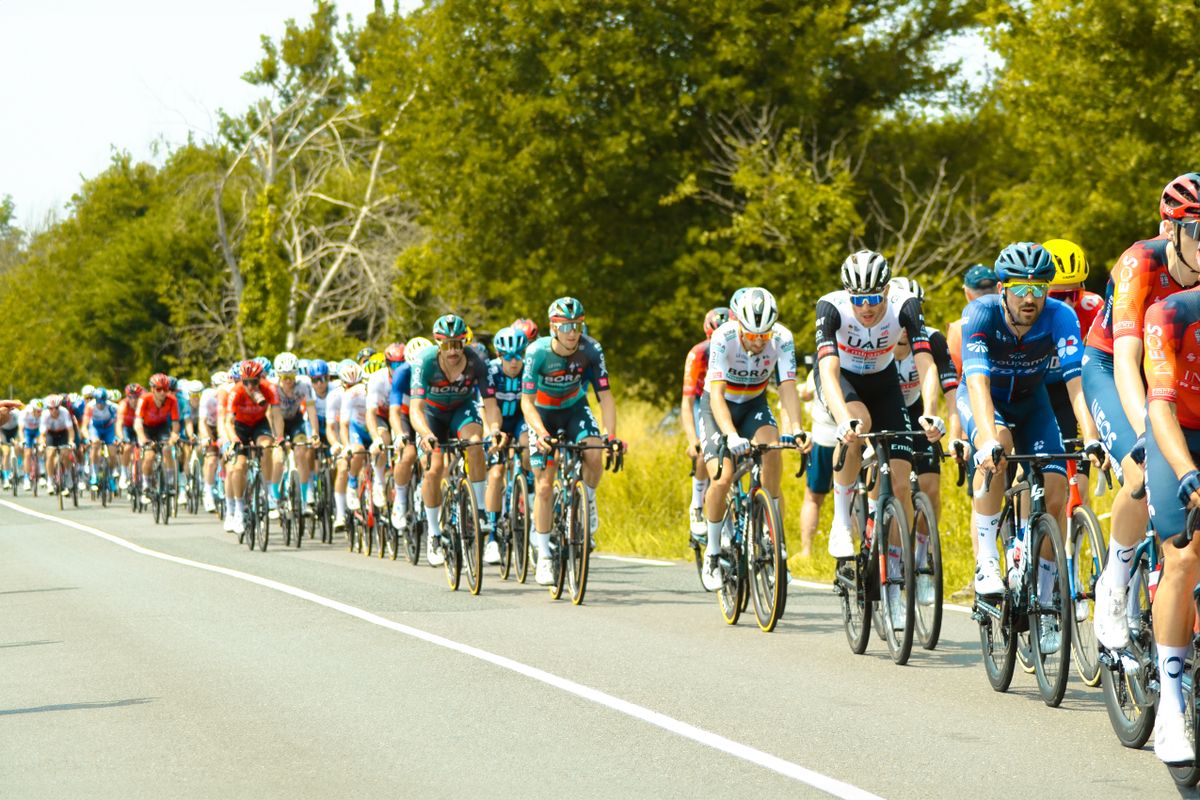
The Cumulative Structure Changes Everything
Cycling is the only major sport where a competition is decided cumulatively over several days, and that single structural fact changes how every market works.
A rider leading the general classification is not necessarily winning on any given day, and a rider who wins five stages can lose the race overall because the time gaps accumulated against them. This is unique among mainstream sports, and it means the analytical unit is time rather than result.
It also creates enormous variance in the general classification, which is why the outright market is less efficient than the stage market. A bettor who understands cumulative time loss has an analytical angle that a results-only model does not.
Stage Winner and the Breakaway Dynamic
Most stages are decided by whether a breakaway survives, and the incentives are counter-intuitive enough to be worth understanding.
The peloton will usually allow a breakaway through because the favourites gain nothing from a sprint finish and lose a great deal from a hard day of racing. Whether the breakaway is then caught depends on the day profile, the gap, and whether the leaders are willing to spend energy.
The practical consequence for betting is that stage winner is frequently decided by an outcome that is close to independent of overall strength. Our motorsport guide covers the comparable dynamic in a different sport, where strategy also outweighs pace.
General Classification and Time Loss
The general classification is settled on cumulative time, and that is where a genuine analytical edge is available.
The arithmetic is straightforward. A rider who finishes 30 seconds behind the winner in the mountains and finishes 10 seconds behind in a time trial is net 40 seconds down, which is decisive over three weeks. A rider who loses 90 seconds on one mountain stage and wins two stages by 10 seconds is only 70 seconds down.
So the correct research is not who is winning stages. It is who is consistently losing small amounts of time, who is vulnerable on a stage profile matching their weaknesses, and whether a rider has the kind of form that holds over three weeks rather than one good day.
Time Trials Are the Cleanest Markets
An individual time trial removes almost everything that makes stage racing difficult.
There is no breakaway, no peloton, no interaction with other riders and no tactical dimension. The result is a pure test of ability against the clock, which means recent time trial performances and time trial specific form are unusually predictive.
These markets are less heavily bet than stage races, and that combination — a clean analytical picture and modest liquidity — is exactly where value tends to sit. A rider with a strong time trial record competing against one with a weak one is a genuinely reasoned position.
Markets, Margin and the Shape of a Cycling Bet
Cycling markets vary more in quality than almost any other sport, for a structural reason: the number of riders and the number of outcomes.
A stage has dozens of possible winners, which means the market must price all of them, and pricing a large field is harder than pricing two sides. The outright general classification is the most efficient market, because the field of realistic contenders is small.
Where the value genuinely sits is in the breakaway and no-break style markets, the combative versus time trial distinctions, and mountain classification — all of which are narrower than the headline markets and priced by fewer people.
A Sensible Cycling Routine
Cycling rewards preparation over reaction more than most sports, because the cumulative structure means a single day tells you very little.
Follow the time loss rather than the stage results, because that is the number that predicts the general classification. Check time trial form before any time trial market. Treat stage winner markets as largely unpredictable and stake accordingly.
Record over a full race rather than a few days, and be willing to sit out entire races. Our journal guide explains why, and our limits guide is worth setting before a Grand Tour.
- Follow time loss, not stage placings
- Check time trial form before time trial markets
- Expect stage winners to be unpredictable
- Sit out entire races, the variance is high
- Record over a full race, not a few days
- Set limits first via our tools guide
The Three Grand Tours and How They Differ
Not all stage races are the same, and the differences are large enough to change how a bettor should approach each one.
The Tour de France is the longest at around three weeks, which means cumulative time loss matters most and a single bad day is survivable. The Vuelta a Espana is shorter and typically has more time trials, which compresses the field. The Giro d Italia sits between the two and has a reputation for drama, with a high proportion of breakaway stages.
The practical implication is that outright markets are tightest at the Tour, because the largest field of realistic contenders and the longest race give the market the most information to work with. The Vuelta outright tends to be slightly softer because the compressed schedule reduces the sample, and stage markets are generally softest at all three because stage outcomes are the least predictable product in the sport.
Our journal method guide is worth reading before a Grand Tour, because three weeks of daily markets will generate more wagers than most bettors realise they are placing.
Team Strategies and Why They Invert Expectations
Cycling is run by teams rather than individuals, and team strategy produces outcomes that a results-only model finds genuinely surprising.
The central mechanism is team radio. Riders speak to each other and to the director about tactics in real time, and a team protecting a leader will slow the pace deliberately to discourage attacks. This produces a slow, controlled race that the leader wins comfortably, and it happens for reasons entirely invisible in any result-based model.
Three practical consequences follow. A domestic team riding its home Grand Tour is significantly more likely to put a rider up the road than the objective strength of that rider suggests. A team with multiple cards will abandon one leader for another at the first sign of trouble, which makes a leader fragile in a way that a pre-race model does not capture. And a team with nothing to gain from the general classification may ride for a stage win, which is a completely different objective with a completely different outcome distribution.
Our motorsport betting guide covers the equivalent dynamic in Formula One, where pit strategy and team orders play a comparable role in determining outcomes that raw pace cannot explain.
Drafting, Breakaway Thresholds and the Practical Edge
The most consistent available edge in cycling comes from the breakeven gap, a number that is published before every stage and almost never used.
The breakeven gap is the distance a breakaway must build for the peloton to have an incentive to chase rather than let them go. When a group goes up the road with a gap of a minute, the chasers will often sit up, because closing it would cost the leader more than it gains. When the gap shrinks to fifteen seconds with a summit finish approaching, the peloton must organise, and the favourites frequently cannot control it.
The practical rule is straightforward and genuinely predictive. Take the over on a breakaway surviving when the gap is small and the finish is mountainous. Take the under when the gap is already large and the finish is flat. These are public, pre-race numbers, and the market prices the general expectation of a sprint finish rather than the specific arithmetic of the gap.
Our exchange trading guide explains how to express a view like this efficiently, and the Asian handicap guide covers the settlement mechanics for the layered markets a cycling bettor will encounter.
Women Cycling and a Genuinely Less Efficient Market
Women cycling is growing rapidly and is priced materially worse than the men market, which makes it the most interesting cycling product for a value bettor.
The reason is straightforward and entirely about coverage. The men market is covered by professional traders at every bookmaker, with sharp models and significant volume. The women market attracts less money, fewer models and fewer specialist traders, and a less efficient market is one where a public, well-sourced analytical observation is more likely to produce an incorrect price.
None of this makes the women market a soft bet. It is still a sport with a wide field and unpredictable stage outcomes, so the same caution about stage winners applies. But the outright and time trial markets are where a considered view has a genuinely better chance, precisely because fewer people are making the same assessment.
Our exchange trading guide covers how to take advantage of a wider spread when liquidity is thin, which is exactly the condition in this market.
Live Betting and Why Cycling Suits It
Cycling is one of the better in-play sports to bet on, and the reason is that the race is continuous, public and long enough for the structure to reveal itself.
A three-week stage race provides a very large in-play window, and the key variables — breakaway gap, group composition, gap to the favourites and gradient — are continuously visible. A rider isolated in a breakaway at two minutes on a shallow gradient is a genuinely different situation from the same rider at two minutes on a 9% climb, and the in-play market frequently prices those two situations too similarly.
The gradient is the key analytical input for live cycling. Attacks succeed and breakaways survive on steep gradients and die on flat sections, and a live rider who is going strong on the ramps is meaningfully more likely to make a move than one going well on the flat. Our in-play guide sets out the general discipline for using this.