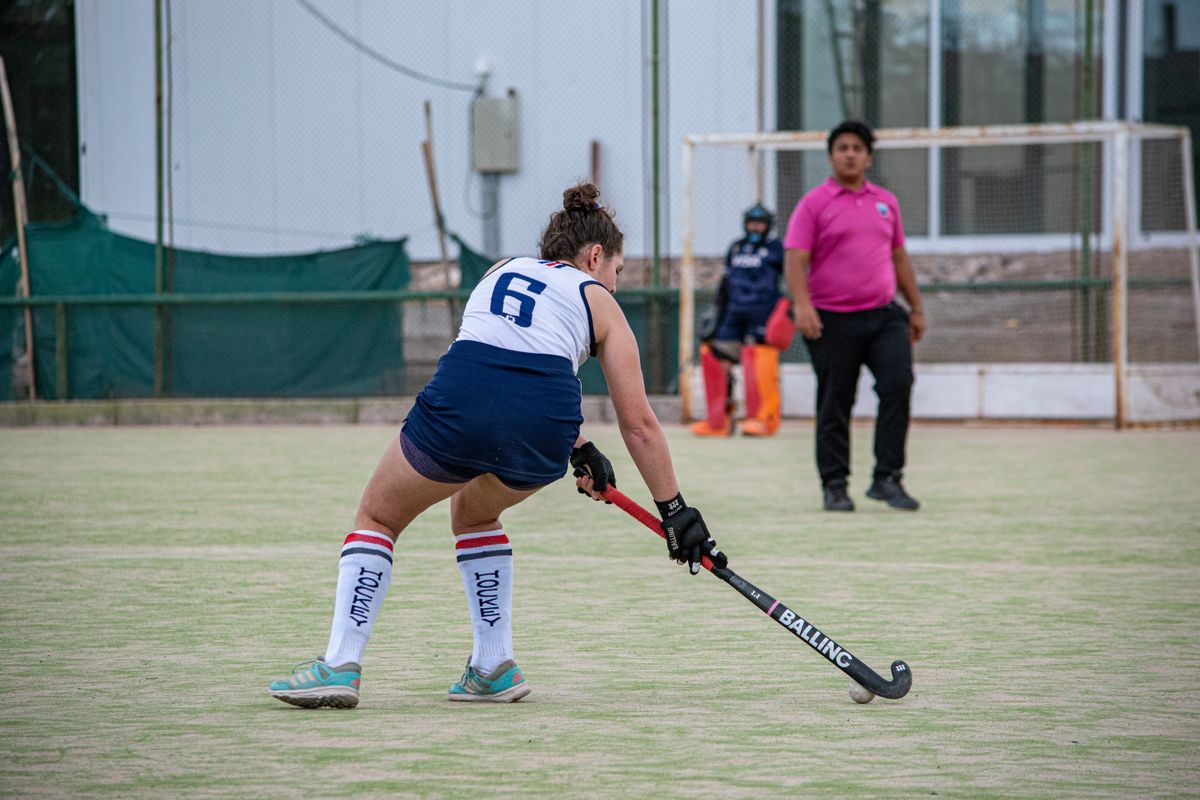
Low Scoring, Set Piece Dominance
Field hockey is a low-scoring team sport in which set pieces produce a disproportionate share of the goals, and that combination is analytically unusual.
A typical match produces few goals, and many finish 1-0 or 2-1. Within that low total, penalty corners account for a large fraction of the scoring. The reason is that a penalty corner is one of the few genuinely repeatable situations in the sport — the geometry is fixed, the routine is practised, and the conversion rate is broadly predictable.
That matters for betting because a repeatable, high-percentage event with a known conversion rate is the ideal raw material for a set-piece market. Our ice hockey guide covers power plays, which serve the same analytical function in a different sport.
The Markets That Exist and How They Work
Field hockey coverage is patchy, but the markets that do exist tend to be narrow and often underpriced.
The most interesting are the penalty corner markets, because they isolate a single repeatable event rather than a full match. Match totals work well because low-scoring matches are highly predictable from two-team scoring rates. Cards and first goal markets are narrower and therefore covered by less money.
Where coverage is poor is the honest limitation: if a market does not exist, a correct assessment cannot be expressed as a bet. Our exchange trading guide covers how to work with thinner markets and wider spreads.
| Market | Availability | Predictability | Why | ||||
|---|---|---|---|---|---|---|---|
| Penalty corner goal | Good | High | Fixed routine, known rate | ||||
| Match total goals | Good | High | Low-scoring, stable rates | ||||
| First goal | Fair | Medium | Scoring rate dependent | ||||
| Match winner | Good | Medium | Two-team strength | ||||
| Cards / fouls | Limited | Medium | Referee dependent | ||||
| Half-time result | Limited | Low | Small sample | Period totals | Limited | Medium | Squad rotation |
Cards, Officials and the Referee Variable
Field hockey has an unusual officiating factor that materially affects totals: a carded player must leave the pitch, and a green card means a temporary suspension.
A yellow card is a caution. A green card results in a temporary suspension of two to four minutes, and a red card means the player and the whole team are removed from the pitch for the rest of the match. A red card therefore removes a whole team from a match in which a typical scoring total is only two or three goals, which makes the total line a poor bet from the moment it happens.
The practical implication is that card markets are genuinely informative and totals are fragile. A referee who cards frequently produces both more card-market signal and a lower-scoring match. Our MMA guide covers the comparable problem of a single official's style dominating a result.
The Two-Goal Rule and What It Changes
Most modern field hockey competitions apply a margin rule designed to stop time-wasting, and it changes how a game behaves once a team is ahead.
Under the two-goal rule, once a team leads by two goals, the margin in which goals can be scored is reduced, and at three goals the game is effectively decided. The purpose is to stop a leading team from running the clock down, but the effect on betting is significant.
A team leading 2-0 does not need to score again, and the chasing team faces a much harder task than the scoreline suggests. That makes match winner markets behave differently from totals in the closing stages, and it means the rule is worth checking on the specific competition before betting a first half or second half total. Our over and under guide covers the general arithmetic.
Squad Rotation and Why Form Data Is Thin
The honest limitation of field hockey betting is that the underlying form data is much thinner than in football, and that is a feature of the sport rather than a data failure.
National and international hockey fixtures are relatively infrequent, which means an athlete or team may play only a handful of competitive matches a year. Rotation in domestic leagues is heavy, particularly around major tournaments, and a strong international side may field a substantially different domestic side.
The practical approach is therefore to weight recent tournament performance more heavily than domestic league form, and to treat a heavily rotated team as a different entity entirely. Our lower-league guide makes the same point about thin information, and the esports guide covers a sport where rosters genuinely change between events.
A Sensible Routine
Field hockey rewards restraint, because the markets are thin and the data is thinner.
Back penalty corner and match total markets, which are the most predictable. Check the two-goal rule on the specific competition before any total. Treat a red card as an automatic end to the total market rather than a complication. And prefer international tournament matches to domestic league fixtures, where rotation makes form data unreliable.
Record over a full season rather than a few matches, because a small sample in a low-scoring sport produces misleading results. Our journal guide explains why, and the limits guide is worth reading given how few markets exist.
- Back penalty corner markets, the cleanest available
- Check the two-goal rule before any total
- A red card ends the total market, treat it that way
- Prefer international to domestic, rotation is heavy
- Weight tournament form over league form
- Accept thin coverage, missing markets cannot be bet
- Set limits with our tools guide
Indoor and Outdoor Are Genuinely Different Games
Field hockey is played on two surfaces that produce substantially different matches, and the surface is frequently omitted from both research and pricing.
Indoor hockey is a fast, high-scoring game played on a much smaller pitch with boards. Boards keep the ball in play, which increases the number of possessions, and corners are more frequent. Matches routinely reach double figures in goals. Outdoor hockey on a full-size grass pitch is slower, lower scoring, and produces far fewer corners.
A team's indoor and outdoor records are frequently very different, and a price set from one is a poor guide to the other. The honest limitation is that indoor leagues are often thinly covered, and a correct assessment of an indoor match frequently cannot be expressed as a bet at all.
Our lower-league guide covers the comparable issue of limited coverage, and the exchange guide covers working with thin markets when they do exist.
Squad Availability and the Rotation Problem
The most common reason a field hockey price is wrong is not a mispriced market but an unrecognised change in the team actually taking the field.
Field hockey squads rotate heavily, particularly around international windows and major tournaments. A side that dominated a tournament in March may field a substantially different group in a domestic fixture in April, and public information about that rotation is often thin.
Two indicators help. Whether the match falls inside an international window, which frequently forces domestic sides to field weakened teams. And whether the opposition has just returned from a major tournament, which carries a genuine fatigue effect that is rarely priced.
Where Field Hockey Betting Sits Against Other Sports
It is worth placing field hockey honestly, because its coverage and analytical maturity are considerably behind the major sports and that is both a limitation and an opportunity.
Compared with football or American football, field hockey has far less betting coverage, thinner markets and less specialist modelling. The available markets are narrower and the prices reflect that. A set-piece market in field hockey is priced by a smaller pool of money than the equivalent corner market in football, and the same reasoning about liquidity and efficiency applies with more force.
The practical consequence cuts both ways. There is less opportunity, because a genuine edge is harder to find in a market where fewer people are looking. But where a market exists and a genuine edge is identified, it is less likely to have been arbitraged away by a sharper competitor.
Our the lower-league guide makes the same argument about second-tier coverage, and the exchange guide covers how to extract value from a market with a wide spread.