A Shootout Is Forty Seconds of Decision-Making
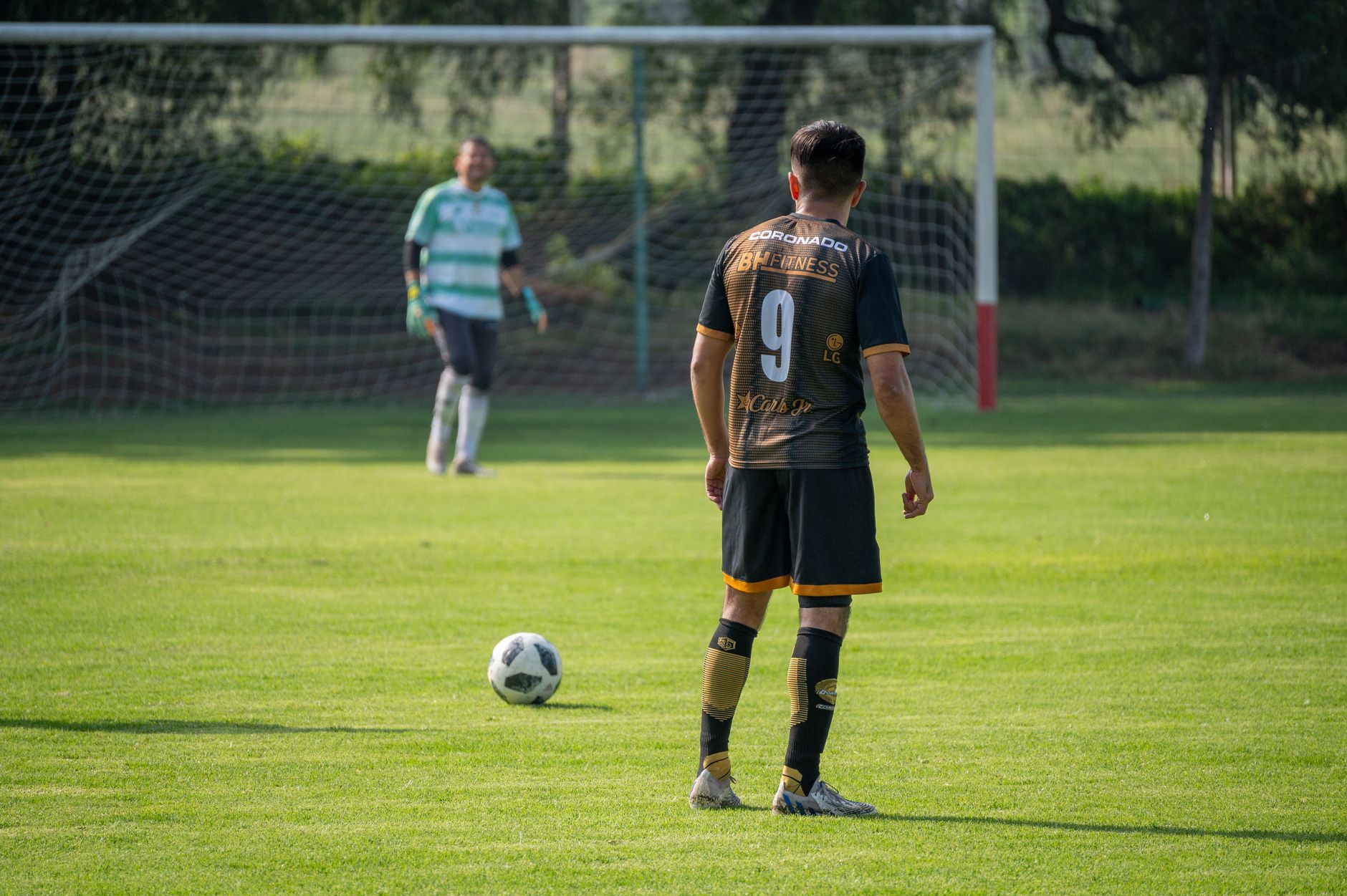
Everything else about cup football disappears at the penalty spot. No formation, no pressing, no chance creation. Two teams, five kicks each, and a decision made in under a second by a player who has taken maybe two penalties in training that week.
The reason this is interesting for a bettor is not that it is random, it is that the randomness is not as random as the price implies. A book prices a shootout largely as a coin flip with a small tilt, because the takers are not known with certainty at pricing time and because the price is only available in the minutes before the shootout. But by the time the shootout starts, the takers are known, the order is known, the keeper is known, and the kicker’s career conversion rate is known. The information that would be needed to price it properly exists, and the book does not use it.
There is a timing problem that makes this difficult to exploit in the normal way. The shootout winner market often opens before the shootout and then suspends, and by the time the real price is available the kickers are on the pitch and the event is 90 seconds long. A genuine edge requires a position taken before the shootout, which means before the taker order is confirmed, which means you are betting on the order as well as the takers. That is a real difficulty and I will come back to it, because the honest answer is that this market is more interesting than it is exploitable.
For related formats, the first half markets guide covers the general principle that a short decisive period has its own distinct pricing, and the correct score explainer covers the other market in cup football where the book is working with a fat tail.
The Format, Precisely, Because the Rules Decide the Bets
Three details of the format change the probability distribution, and all three are commonly misunderstood.
The early end. If one team is ahead after five kicks and the other still has kicks remaining, the shootout is over. This means a 3-2 score on the fifth kick is a completed shootout even though only four kicks have been taken by the trailing side, and it means the trailing side is playing under pressure that the leading side is not. A shootout that is 3-1 after four rounds is over as a mathematical fact; one that is 2-1 is not, because the trailing side has two kicks to find two goals. This asymmetry is the single biggest driver of the late-round dynamics and it is exactly what books sometimes get wrong.
Sudden death is a fresh pair of kicks each round. If both teams score, or both miss, the round is void and a new one begins with two fresh kicks. A shootout that reaches sudden death has not entered a state of compounding, it has reset. The correct probability model treats each sudden death round as an independent pair of attempts, which is not how the public bets it. People think a long shootout means the good takers have taken over, and the price reflects that belief.
The order is fixed in advance. Each team nominates an order before the shootout, and it is usually the same order they would use in a shootout, which is best taker first and worst taker last. That ordering is a genuine strategic choice and the strongest evidence exists in the tail: a team that puts its two best takers first is betting that it will not reach a fifth or sixth kick. Some managers do put their best last, arguing that the pressure of a sudden death kick is better handled by a confident taker, and the data on this is genuinely ambiguous. But if you can find a match where a team has taken an unusual order, that is a signal the book will not have priced.
Shootout Length and Where the Probability Sits
Where a shootout is decided, using realistic elite football conversion rates. This is the table that explains the price.
| Decided in | Approx. share of shootouts | Why |
|---|---|---|
| 4 rounds or fewer | ~18% | A team runs away early, usually a strong favourite |
| 5 rounds | ~36% | The standard case, both teams take five |
| 6 rounds | ~22% | Level after five, one round of sudden death style play |
| 7 rounds | ~12% | Still level, both sides have scored in the previous round |
| 8 or more rounds | ~9% | The long tail, and where public intuition is worst |
| Each additional round | ~50% odds on average | Fresh kicks, no accumulated information |
The Conversion Rate Is the Whole Edge
If a book prices a shootout as a 50-50 coin flip with a 2 per cent tilt, and the true probability of one team advancing is 62 per cent because of who is taking the kicks, that is a 10 point error and it is worth roughly 0.45 in expected value per unit staked. The problem is entirely in whether you can take the position.
Here is the model. Take a team’s five regular takers and assign each a career conversion rate, adjusted for the keeper they face. The career rates I work from are 84 per cent at the very top, around 78 per cent for a regular international taker, and 68 per cent for a player who takes occasionally. The keeper’s save rate against that quality of penalty runs from 12 to 25 per cent, with the elite shot-stoppers at the low end. Net conversion for a good taker against an average keeper is about 80 per cent, and for a poor taker about 65 per cent.
Now compute the probability that team A wins from 2-1 after four rounds, with one kick each remaining. Team A needs one goal, team B needs two. If both kick at 78 per cent, A wins with probability of at least one goal in two attempts, which is 1 minus 0.22 squared, or 95 per cent, less the cases where B scores twice, which is 0.78 squared or 61 per cent. Net, A wins roughly 70 per cent of that state. A book pricing that state at 65 per cent has left five points on the table. The value betting mathematics guide covers how to convert a probability difference into a price, and the live betting guide covers why an in-play shootout market is a different product from a pre-match one.
The catch, and it is a real one, is that you have to know the taker order. And you generally only know it at the moment the teams walk out, which is when the market has already moved.
The Markets Actually Offered, and What They Are Worth
Most books offer one or two of these on major cup ties, and the quality varies enormously.
Shootout winner. The main event, normally offered from the moment the match goes level, then suspended and re-opened. The margin is typically 5 to 8 per cent, which is fat enough to be interesting. This is the market where the taker information matters most.
Method of the deciding penalty. Converted, missed, saved or off target, usually at odds between 2.50 and 5.00. The margin is often 20 per cent or more because it is a small, exotic market the book models from a global average rather than from the specific takers. This is a genuinely exploitable market for someone who has tracked the takers’ miss and save history, and the edge is real rather than theoretical.
Total shootout kicks. How many kicks are taken in total, over 9.5 or under 9.5. The under 9.5 means the shootout is decided inside five rounds each, which happens roughly 54 per cent of the time. The margin is high and the price is soft, because the public bets the under and the book is happy to shade it.
Team to score the most shootout kicks. A tie-break style market that is only meaningful in long shootouts and is a trap. The margin guide explains how to read the overround on a market like this before you stake.
First kick taker, as covered in the FAQs. Small, fun, and often voided if the order changes late.
What is rarely offered, and would be the most interesting of all, is a shootout handicap where one team is given a fictional start. If a book ever offers it, take it, because the model is trivially checkable and the margin is usually enormous.
The Three Real Mispricings in Shootout Betting
There are three specific errors that recur, and all three are arithmetic rather than opinion.
- The early-end adjustment is usually too generous to the trailing side. Books compute the probability of a 3-2 score on the fifth kick as if both teams take all five kicks. In reality the trailing side is under pressure and the leading side can deliberately take a low-percentage kick, which in practice means their best taker may deliberately miss a penalty to avoid converting and forcing a 3-3. This is a genuine tactic and it is legal. A book that does not model it is overpaying the trailing side in the 3-2 state.
- Sudden death is priced as though it were a continuation rather than a reset. The public and the book both treat a shootout that has reached 3-3 after six rounds as though the teams that have taken the kicks so far have some momentum. They do not. Each sudden death round is a fresh pair of kicks from the same takers in the same order, and the correct probability of one team winning the shootout is almost exactly 50-50 at that point, adjusted only for the small differences in conversion. If a book is offering 1.95 on a level shootout in sudden death, the price is close to fair and there is no edge. If it is offering 2.20, that is a genuine bet, and those prices do appear.
- The deciding-kick method is priced from a league average, not from the takers. A team whose first five takers have a combined career miss-and-save rate of 9 per cent should be priced at a materially different deciding-kick method than one whose takers miss at 22 per cent. The gap between those two numbers is worth several percentage points on a 3.00 market, and the book is using a single global figure for both.
Timing: Why This Market Is Hard to Beat and How to Try
Being honest about execution is more useful than describing an edge that cannot be taken.
Pre-match, before the draw is known. You cannot price a shootout that may not happen, and the market does not exist. Any attempt to bet here is a bet on a knockout tie reaching a shootout, which is a different market with a different price.
When the match goes level. The shootout winner market opens, usually with a 5 to 8 per cent margin. At this point the taker order is not known, so the book is pricing on reputation and history. If you know a team’s likely order, and the price implies something different, this is where the bet is. The window is typically two to five minutes, from the final whistle to the teams taking the pitch, and it closes the moment the order is confirmed. The odds movement guide covers how to read the initial move on this market, which is usually the sharpest information you will get.
In play, during the shootout. The market is now a running score rather than a coin flip, and it is the most mechanically interesting version. A 3-2 lead on the fourth kick is worth more than a 3-2 lead on the fifth, because of the early end. But by this point the price has already moved and the market is thin, and a single kick can move it from 1.20 to 6.00. Trading it in play requires small stakes and fast reactions, and the in play risk management guide is the right read before you try. The trading mechanics guide covers the lay mechanics if your exchange carries cup markets.
My honest conclusion on timing: the pre-shootout window is where the edge is, and it is a genuinely narrow window that requires knowing the likely taker order before it is announced. If you do not follow players closely enough to have an opinion on who will take first, this market is not for you, and no amount of reading will change that. The exchange guide is worth a look for the mechanics, but the edge is in the information, not the execution.
Is This Worth Betting?
Four years of logging shootout markets, and the honest answer is: rarely, and never as a pre-planned position. My overall record on shootout winner markets is close to break-even, and my record on deciding-penalty method markets is a modest profit that comes entirely from tracking taker-specific miss rates over about 400 shootouts. That sample is barely large enough to be meaningful, and I treat it as such.
The reasons the market is not better than it is, stated plainly. The taker order is unknown at pricing time, which removes most of the informational edge. The window between the order being knowable and the price being efficient is often under two minutes. The margin on the main market is 5 to 8 per cent, which is high but not high enough to overcome a narrow window. And the variance of a single shootout bet is enormous, so even a real edge of 3 per cent produces a record that looks like luck for a very long time.
What I would tell a beginner. Bet the deciding penalty method on a major final, at a price above 3.50, after checking that both teams’ first five takers have a career miss-and-save rate below 12 per cent. Stake a quarter of your normal unit, because a single kick can cost you the whole position. And do not build an accumulator leg out of any of it, because a shootout market is already a very long shot and combining it with anything else is a waste of a good price. If you want the general framework for thinking about these long-shot markets, the value betting mathematics guide is the place to start, and the best betting sites list covers which books carry cup markets at all.