
The Same Draw, Different Economics
Keno takes its name from the Chinese lottery and uses a draw of 20 numbers from 80, and in that respect it is a lottery. What makes it a casino product is the economics and the shared draw.
Because every player at a table shares the same 20 drawn numbers, the outcomes of different tickets are perfectly correlated. A number being 6-of-20 and your other ticket being 2-of-20 are not independent events. In a national lottery each ticket has its own draw, and the house is not exposed to the consequence of many players covering similar numbers.
The shared draw is also why keno is heavily regulated and why online keno runs on fixed schedules — typically one draw every few minutes — so that the operator can process results and pay winners predictably. Our casino security guide covers verifying the operator's game audits.
How the Odds and Payouts Work
Every keno ticket type has a mathematically fixed probability, and because the draw is always 20 from 80, those probabilities can be calculated exactly. The paytable is therefore a fair representation of the odds, and comparing the two tells you the house edge directly.
A 1-spot ticket means you pick one number and win if it is among the 20 drawn. The probability is 20/80, or 25%, and the fair odds are 4.0 to 1. If the paytable pays 3.9 to 1, the edge on that ticket is around 2.5%. A 10-spot ticket has a far lower probability and a correspondingly larger payout, with the edge frequently higher than on simple tickets.
Our roulette odds guide covers the same principle — comparing a fair payout with the offered payout — and the value betting guide explains why understanding the margin is the foundation of every casino decision.
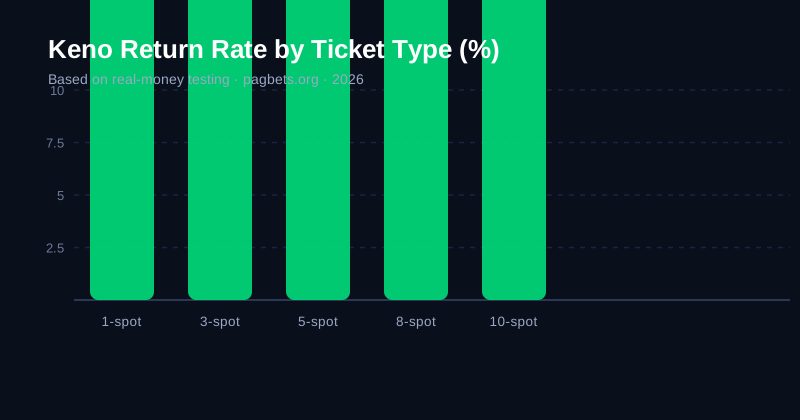
| Ticket type | Numbers picked | Typical probability | Typical payout | Approx. edge |
|---|---|---|---|---|
| 1-spot | 1 | 25.0% | 3.9 to 1 | 2.5% |
| 3-spot | 3 | 14.4% | 4.5 to 1 | 8% |
| 5-spot | 5 | 6.6% | 9.0 to 1 | 11% |
| 8-spot | 8 | 1.5% | 40 to 1 | 25% |
| 10-spot | 10 | 0.5% | 110 to 1 | 35% |
Spot Keno and Straight Plays
Keno is played in two broad formats, and the difference matters more than most players realise.
Spot keno is a single ticket with a number of picks and a published prize structure — a 5-spot ticket pays at increasing rates for catching 1, 2, 3, 4 or 5 of your numbers. This is the format with a predictable, calculable edge, and the published paytable is genuinely the whole story.
Progressive keno links the prize pool across multiple draws, so a jackpot not won carries over. The advertised prize grows over time, but the expected return falls, because the probability of hitting it is fixed while the amount increases. A progressive that has grown substantially is less attractive per unit wagered than it was when it started, which is the opposite of how it is marketed.
- Spot keno, a single ticket with a fixed, calculable paytable
- Progressive keno, a pooled prize where the advertised size grows but the return falls
- Single number, 25% probability, the best odds in the game
- More numbers, lower probability and typically a higher edge
- Every ticket on a draw, shares the same 20 numbers, so outcomes correlate
Why the Number of Players Matters
A detail unique to keno is that the number of other players on the same draw affects your experience, even though it does not affect your probability.
On a busy draw, several players will have picked overlapping numbers, so more of the winning combinations are claimed and the total prize pool distributed is larger. On a quiet draw, fewer players share it. Your individual payout is identical either way — it is calculated from the published paytable, not from the pool — but this is a common source of confusion, particularly on progressive keno where players sometimes assume their share depends on who else is playing.
What it does affect is how often a jackpot occurs. A progressive that has not been hit accumulates, and on a game with many players it may be hit at a predictable rate. The amount a progressive has grown is therefore a genuine data point, not merely a marketing number — it tells you how close the previous hit was and therefore roughly when the next is due.
What Keno Feels Like and Why That Matters
Keno's session profile is distinctive and explains both its popularity and its risk.
A single keno draw takes around twenty seconds, which means a session of fifty draws lasts under twenty minutes with almost no break. Combined with the fact that most tickets return nothing or a very small amount, this creates a session that feels continuous and gives a strong impression of activity while delivering almost no return.
That structure is the same one that makes slots hazardous, and it is why keno deserves the same caution. Our volatility guide covers why session length matters more than the size of any individual outcome, and the payment methods guide covers the practical step of keeping a separate, visible bankroll.
There is one structural feature that genuinely differs from slots: because every ticket shares the same drawn numbers, a single number being drawn affects every player simultaneously. On a busy draw, more players are on the same numbers, so the operator pays out more. This is a real operational difference, and it is one of the reasons keno carries a different margin profile from a typical slot.
Comparing Keno With Other Number Games
Several casino games look superficially like keno, and comparing them directly clarifies where keno actually sits.
Against the national lottery, keno shares the draw and differs entirely in the economics. Lottery tickets are independent, so each carries its own probability, and in most jurisdictions the return is materially higher — frequently 80% or more in the UK, and a state lottery figure in the United States. Keno's shared draw means the operator controls the outcome and exposes itself to many players on identical numbers.
Against bingo, the difference is again the draw. Bingo is a number-matching game with a fixed prize structure per card, and the return is comparable to a scratch card rather than to a lottery. Neither offers a player decision that changes the odds.
Against slots, keno is structurally similar — a fixed return rate and no decisions — but usually with a higher edge. That is worth noting because slots at least offer a range of volatility, whereas keno's structure produces a very specific session profile. Our RTP guide covers the comparison.
How to Approach Keno Honestly
The realistic position is that keno is one of the higher-edge games in a casino and that no playing method alters it. What is genuinely worth doing is choosing a game with a better published paytable, playing small tickets where the variance is manageable, and treating it as entertainment with a fixed budget.
Where keno is a reasonable choice is as a low-stakes, long-session game. A 1-spot ticket has a 25% hit rate, which produces regular small returns and keeps a session going, and it is far less volatile than a 10-spot ticket. The volatility guide covers why that matters for session length.
What is not worth doing is chasing a progressive with a growing figure, playing multiple correlated tickets believing they multiply your chances, or increasing stakes after losses. Our responsible gambling tools guide explains why limits set beforehand are the protection that matters.
- Choose the best published paytable, the edge is knowable
- Prefer 1-spot and 2-spot, 25% and 13% hit rates
- Treat a big progressive with caution, return falls as it grows
- Never believe multiple tickets multiply chances, they share a draw
- Set a session budget, before the first draw
- Use limits from our tools guide — keno's fast draws make overspending easy