
The Highest-Variance Sport in Betting
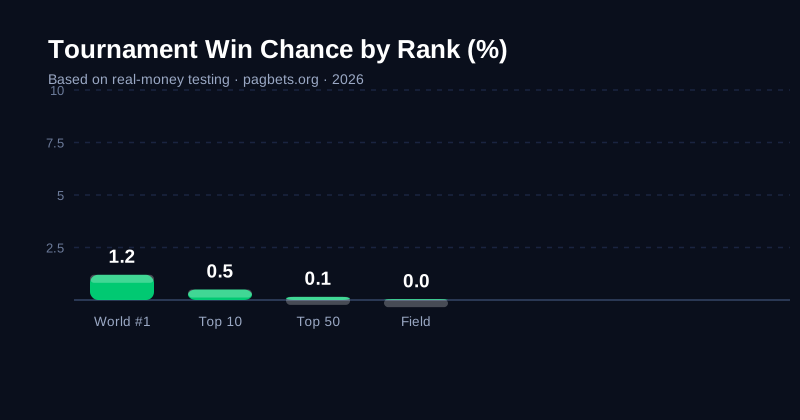
Golf is unique in betting: a tournament winner emerges from a field of 150 after four days, and even the world's best player wins any single event under 15% of the time. That variance produces the longest outright odds in sport — 20/1 to 200/1 — and a market priced less efficiently than almost any other. For the research-driven bettor, golf rewards one skill above all: course-fit analysis, the gap between a player's ranking and their actual suitability for this week's course.

The Three Core Markets
Outrights: bet the tournament winner. High variance, high odds, and the market where research compounds most. Each-way: half your stake on the win, half on placing (top 5–8 depending on bookmaker). Golf each-way is the format's best friend — solid players regularly cash the place half. Round matchups: one player versus another over 18 holes or the tournament; lower variance, faster settlement, and the best market for head-to-head research. Most golf bettors combine a few each-way outrights with matchup bets to smooth the variance.
| Market | Variance | Typical odds | Best for |
|---|---|---|---|
| Outright winner | Very high | 20/1 – 200/1 | Long-term value |
| Each-way | High | Same + place terms | Balanced exposure |
| Round matchup | Medium | 1.80 – 2.20 | Head-to-head research |
| Finishing position | Medium | 2.00 – 5.00 | Top-20 type targets |
Course Fit: The Edge That Beats Rankings
The market prices golfers by world ranking and recent form. The bettor's edge is course fit: how a player's skill profile matches the specific demands of this week's venue. The factors: course length (long hitters gain on 7,500-yard tracks), fairway width (accuracy players gain on narrow layouts), green speed and type (putting splits the field more than any single stat), and weather (wind specialists exist, and the market underweights them). A player ranked 40th who fits a course perfectly is frequently better value than a top-10 player who doesn't.
- Length: driving distance matters most on long, soft courses
- Accuracy: fairways-hit rate rules on narrow, penal layouts
- Putting: strokes-gained putting on the relevant green type
- Weather: wind and rain specialists outperform their rankings

Building a Tournament Portfolio
The professional pattern is a portfolio, not a single pick: three to five each-way outrights at 25/1 to 80/1, selected purely on course fit and recent strokes-gained data, each staked at 0.5–1% of bankroll. Add one or two matchup bets where your research is strongest. The portfolio's maths: one placed selection returns the full stake, one winner returns the season. Golf's variance means losing weeks are normal — the portfolio structure, and flat staking, is what survives them.
Live Golf Betting
Live golf moves slowly enough to reward genuine watching: a player's ball-striking often runs ahead of their score for a round or two, and the live outright market lags that signal. Bet on players who are striking the ball well but scoring average — the classic live value pattern. The market is thinner than pre-tournament, so stakes should be smaller and patience longer.
Getting Started
Pick one tour (the PGA Tour for depth), follow three tournaments without betting, and build course-fit notes for each venue. Then run a small each-way portfolio at two bookmakers from our rankings, flat stakes inside your bankroll rules, and log every selection with its course-fit reasoning. Golf rewards exactly this patience — it's the one sport where four days of watching genuinely improves the next week's bets.