
The Unspoken Truth of Online Betting

Every online bookmaker limits winners. It is the industry biggest open secret: the moment your betting pattern consistently beats the market, your maximum stakes shrink. Some accounts get weeks, some get months, but long-term winners are almost always limited at the traditional bookmakers. This guide explains the mechanics, the limits, the slowing strategies, and the genuine alternatives.
Animated graphic showing betting stake being reduced from maximum to minimum
The moment the maximum stake drops from $200 to $1 — the limit takes effect instantly. — Photo credit: PagBets.org

Types of Limits

Four types of limits affect day-to-day betting: stake limits reduce your maximum per-bet stake; promo removal excludes you from bonuses; account closure ends your access; and market-specific limits restrict niche leagues while keeping major markets open.

Animated graphic showing a bet rejection message on a betting interface
The moment a limit bites: 'Your stake exceeds the maximum amount allowed.' — Photo credit: PagBets.org
Limit typeTriggerHow you notice
Stake limitConsistent winningMax bet drops to $1-$10
Promo removalMatched-bettingNo more boosts or offers
Market limitNiche market valueHigh limits on TV, tiny on small leagues
Full closureExtreme casesAccount inaccessible, withdrawal available

Why It Happens

Bookmakers use closing-line-value tests: if your average bet beats the final odds consistently, you are a losing customer and the operator protects its margin by reducing your stake. Arbers are detected fastest, usually within weeks. Consistent value bettors last longer, but the outcome is the same if the edge survives.

The fundamental principle: bookmakers profit from margin on turnover. Customers who remove that margin are unprofitable regardless of their knowledge of the sport.
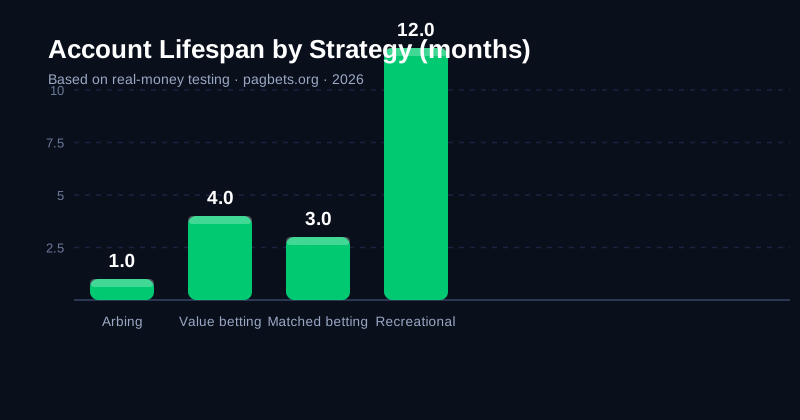
Chart showing how account lifetime correlates with limiting speed
Accounts limited fastest: arbers (weeks), value bettors (months), recreational players (rarely). — Photo credit: PagBets.org

How to Slow Limiting

You can delay limits, not prevent them. Vary stake sizes (round-number stakes look automated). Do not withdraw immediately after wins. Use bonuses and promotions. Accounts following this pattern survive months longer in our observation.

The Genuine Alternatives

Betting exchanges do not limit winners because you are betting against other users. Exchange operators profit from commission on winning bets, so successful customers are their best customers. Hold multiple accounts from our rankings — when one limits you, another holds active prices.


Gambling involves risk. Set deposit limits and use the tools in our responsible gambling guide.

Frequently Asked Questions

Why do bookmakers limit winning accounts?
Bookmakers profit from margin on total turnover, not from individual results. Accounts that consistently beat the closing line are losing accounts for the operator — limiting them to small stakes is a business decision, not a legal one. Arbers and value bettors get limited fastest; recreational players are rarely affected.
What types of betting limits exist?
Stake limits (reduced maximum per bet), removal of promotions, account suspension, and outright closure. Stake limits are most common: your maximum bet might drop from $200 to $10 or even $1. Some operators limit specific markets rather than the whole account.
How do I avoid being limited?
You can slow it down but not prevent it long-term if you're a consistent winner. Tips: avoid round-number stakes, don't bet extremely early lines exclusively, take advantage of bonus offers (they're profitable for the operator and lower limiting priority), and avoid arbitrage patterns at the same bookmaker.
What should I do when my account is limited?
Register at another bookmaker from our rankings — every site limits eventually. For serious value bettors, betting exchanges are the only venue that doesn't limit winners. See our trading guide.
Is it legal for bookmakers to limit winners?
Yes — bookmakers have the right to refuse service or restrict stakes, usually stated in their terms. Licensed operators must still honour pending bets and allow withdrawals. Unfair limiting practices can sometimes be reported to the licensing authority — see our methodology.