The Loudest Table, Explained Quietly
Craps has the worst reputation-to-difficulty ratio in the casino: from outside it's a wall of noise and a table covered in unreadable bets; inside, it's two dice, two phases and a handful of decisions. The reward for learning it is real — the pass line carries a 1.41% house edge, and the odds bet behind it carries zero, making craps one of the cheapest games in the building for players who stick to the right bets. This guide explains the game loop first, then the bets worth making.
The Game Loop: Come-Out and Point
One shooter, two dice, two phases. Phase one — the come-out: the first roll. A 7 or 11 wins pass-line bets immediately; a 2, 3 or 12 (craps) loses them; any other total (4, 5, 6, 8, 9, 10) becomes the point. Phase two: the shooter keeps rolling. If the point repeats before a 7, pass-line bets win. If a 7 lands first, they lose and the dice pass to the next shooter. That's the entire structure — everything else on the table is decoration layered on this loop.
| Come-out roll | Pass line result | Next |
|---|---|---|
| 7 or 11 | Win immediately | New round |
| 2, 3 or 12 | Lose immediately | New round |
| 4, 5, 6, 8, 9, 10 | Point established | Roll to repeat point before 7 |
Why Seven Rules the Table
The game's logic flows from one probability: with two dice, 7 is the most common total — six of 36 combinations (16.7%), versus 5 for 6 and 8, down to 1 for 2 and 12. On the come-out, that makes 7 the friend (instant win). After the point is set, the same probability makes 7 the enemy (instant loss) — which is exactly why the odds are set the way they are, and why the point matters. Grasp that single fact and every craps rule becomes obvious.
The Bets Worth Making (And the Ones to Skip)
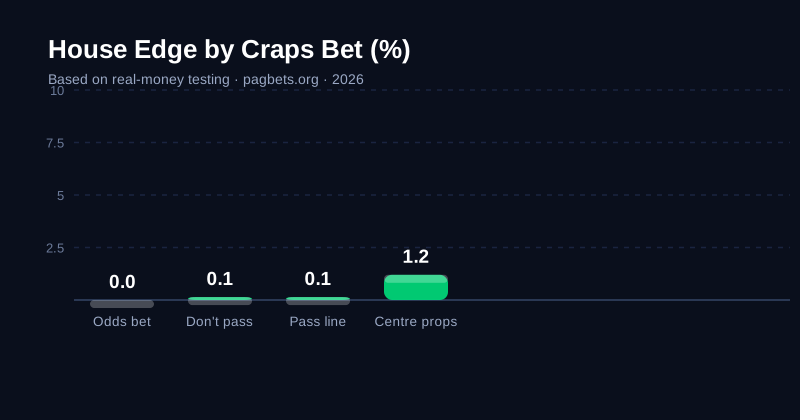
Three bets cover intelligent craps. Pass line: the starter at 1.41% — bet it on the come-out and root for the loop above. Don't pass: the inverse at 1.36%, betting against the shooter — socially unpopular, mathematically fine. Odds bet: after a point is set, back your pass-line bet at true odds with no house edge at all — the only zero-edge bet in the casino, and the reason craps rewards learning. The centre prop bets — any 7, hardways, hops — carry 9–16% edges and exist to fund the light show. Skip them entirely.
| Bet | House edge | Verdict |
|---|---|---|
| Pass line | 1.41% | The standard |
| Don't pass | 1.36% | Slightly better, less fun socially |
| Odds (behind pass/don't) | 0% | The best bet in the casino |
| Centre props (any 7 etc.) | 9–16.7% | Avoid |
Etiquette and Pace
Craps etiquette intimidates newcomers more than the rules: don't say "seven" after the point is set (superstition, but respect it), place bets between rolls only, and never touch chips or dice once the shooter has them. Online, most of this disappears — RNG and live craps handle the mechanics cleanly. The pace matters: craps rolls fast, so flat-bet within your bankroll rules and time-box the session.
Getting Started
Learn the loop with free-play or minimum-stake tables at a licensed casino from our rankings — Stake and 22Bet both carry craps. Start with pass line only, add the odds bet once the loop is automatic, and enjoy the cheapest entertainment on the floor.