One Table, a Fifteen-Fold Range of Prices
Craps has a reputation for confusion that is entirely deserved at the layout level and entirely undeserved at the maths level. Every bet on the table is a question about the probability of a dice total, and there are only eleven possible totals.
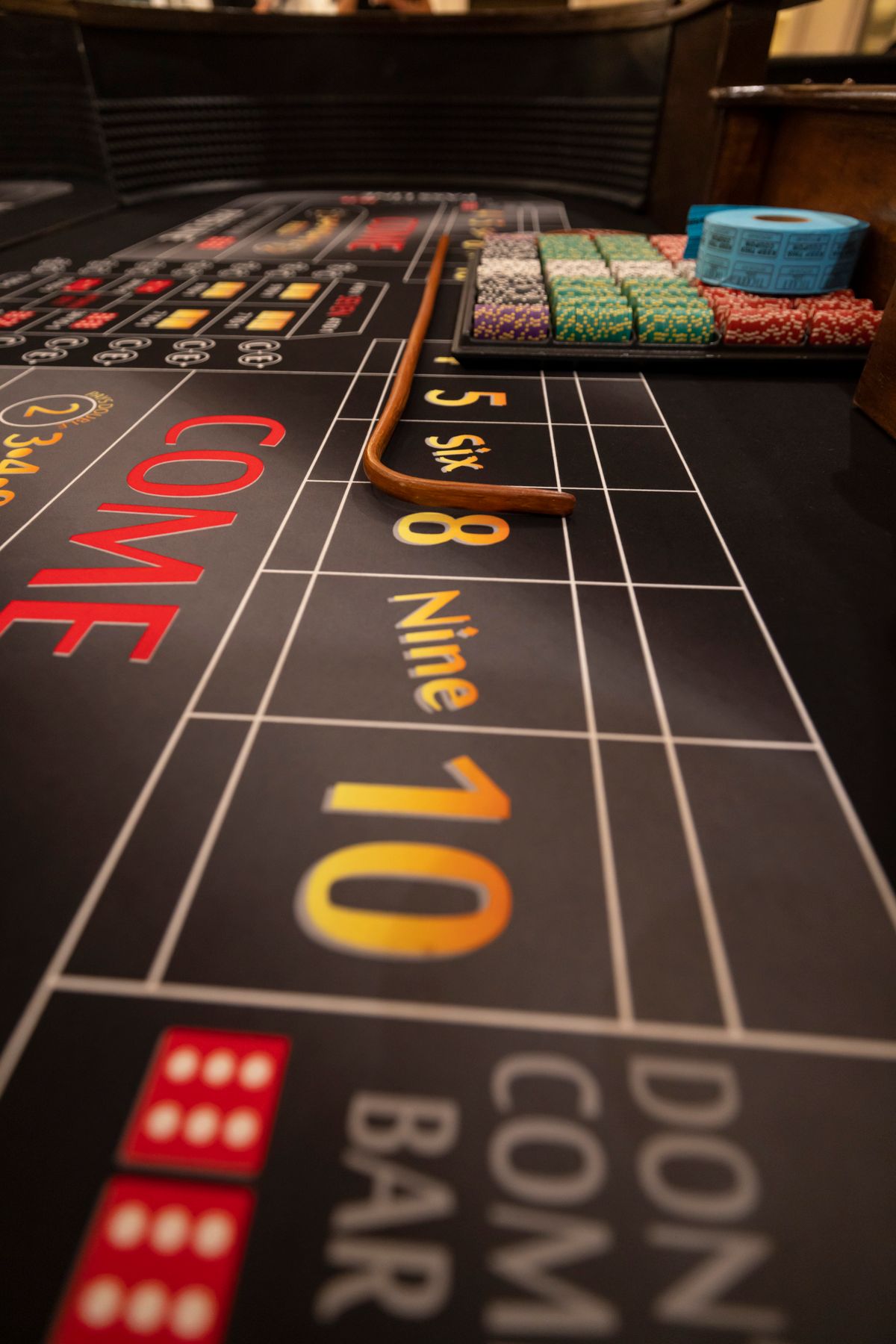
The reason the game has a bad name among bettors who lose money at it is that the layout presents a 0.5% wager and a 16% wager identically. Nothing on the felt indicates which is which, and the more visually prominent a bet is, the more likely it is to be expensive.
Our the craps beginners guide covers how the game is played, and the house edge guide covers what the edge figure means in practice.
Every Bet Ranked by What It Actually Costs
The spread of house edges on a single craps table is wider than in any other mainstream casino game, and the difference between the best and worst bets is enormous.
The free odds wager deserves specific attention: it is the only bet in a casino with no house edge whatsoever, because it pays at true odds. That does not make the game profitable; it dilutes the edge on the base bet.
| Bet | Approx. house edge | Type | Verdict |
|---|---|---|---|
| Free odds | 0% | Supplement | The cheapest bet in any casino |
| Don't pass | ~1.36% | Base | Marginally best base bet |
| Pass line | ~1.41% | Base | Excellent, the standard bet |
| Come / Don't come | ~1.36-1.41% | Base | Same as pass line |
| Field | ~2.7-5.5% | One roll | Depends on layout rules |
| Any seven | ~16.7% | One roll | Among the worst available |
| Hard eight | ~9.1% | Specific | Poor value |
| Hard four or ten | ~11.1% | Specific | Poor value |
| Any craps | ~11.1% | One roll | Poor value |
Free Odds, and Why It Changes the Whole Game
The free odds bet is the reason craps deserves attention from a bettor who cares about cost, because it behaves unlike anything else on a casino floor.
It is an additional wager placed behind a pass line bet once a point is established, and it pays at true odds with no margin built in. A point of four or ten pays two to one, which is exactly the correct price; a point of five or nine pays three to two; six or eight pays six to five.
The effect is arithmetic. If the base bet carries 1.41% and the odds portion carries zero, the combined edge on total money at risk falls as the odds portion grows. At double odds the effective edge roughly halves, and at higher multiples it falls further. Our the volatility guide covers why a lower edge still produces losing sessions.
Where the Money Actually Goes: the Expensive Bets
Everything that makes craps exciting is expensive, and the relationship is not coincidental.
The hardways require a specific roll composition, and the true odds are considerably worse than the price paid. One-roll bets like any seven or any craps are priced against outcomes that fail far more often than they succeed, and they carry some of the widest margins in the entire casino.
These bets also share a second property: they resolve immediately, which means the number of decisions per hour is very high and the cost per hour rises accordingly. A bettor making one-roll wagers is not just paying a worse price; they are paying it far more often. Our the volatility guide covers the decisions-per-hour effect in full.
The Simple Version of Playing Craps Well
Craps strategy is genuinely simple once the layout is decoded, and the simplicity is uncomfortable because it removes most of the theatre.
Play the pass line or don't pass, and take maximum free odds whenever a point is established. That combination is among the cheapest available in any casino and requires no further analysis.
Ignore the middle of the layout. The proposition bets exist because they are profitable for the operator and visually inviting, and there is no version of a hardway or one-roll wager that improves a session's expected cost. Our the etiquette guide covers the practical table conventions this involves.
- Pass line or don't pass as the base bet
- Take maximum free odds, it carries zero edge
- Avoid hardways, roughly 9-11% cost
- Avoid one-roll bets, up to 16% and frequent
- Ignore the middle of the layout, entirely
- Set limits with our tools guide
Table Limits and Why the Minimum Matters Here
Craps table minimums interact with the odds bet in a way that surprises players coming from other games.
The base bet and the odds bet are frequently subject to different minimums, and the odds wager typically requires a multiple of the base. On a fifteen table minimum, the practical maximum odds multiple available may be well below the table's advertised limit simply because of the stake required.
The practical consequence is that a higher minimum table with better odds multiples can be cheaper overall than a low minimum table with restrictive multiples, because the effective edge depends on the ratio between base and odds rather than on either alone. Our the live casino guide covers where these tables are available online.
Come Bets, and Whether They Add Anything
Come and don't come bets are functionally an extension of the pass line rather than a separate strategy, and treating them as more is a common misunderstanding.
Placing a come bet makes the next roll a fresh come-out for that specific wager, which lets a bettor have multiple independent point cycles running at once. The maths is identical to the pass line, and the odds can be taken on each.
The genuine benefit is exposure management rather than edge, since the cost per unit is unchanged. A bettor running several come bets is playing the same favourable game across more independent positions, which increases variance without improving the price. That is a legitimate preference and not an advantage.
A Short Reference for the Table
A bettor who remembers four things will avoid nearly every expensive wager on a craps layout.
The pass line and don't pass are the two good base bets. Free odds is free of edge and should be maximised. Hardways and one-roll bets are the expensive middle of the layout. And the field bet sits in between, with a cost that depends on how the specific layout pays a twelve.
Then set a stop before playing. Our the etiquette guide covers live table conduct, and the online versus land comparison covers how the two differ on limits and pace.
- Pass line and don't pass are the good base bets
- Free odds carries no edge, maximise it
- Hardways and one-roll bets are the expensive middle
- Field sits in between, check the twelve payout
- Base and odds have different minimums, check both
- Set a stop before playing at the table
The Come Out Roll and the Point Cycle
Understanding the two phases of a craps round explains the pass line structure better than any description of the layout.
The come-out roll resolves the pass line bet directly. A seven or eleven wins, a two, three or twelve loses, and anything else establishes a point. Once a point is set, play continues until that point or a seven appears, which is when the round ends and the next come-out begins.
Everything about the pass line follows from that structure. The reason the free odds bet cannot be placed on the come-out roll is that there is no point to attach it to. And the reason don't pass is laid differently is that the sequence reverses around the point.
Our the beginners guide covers the full round in detail, and the online comparison covers how a live dealer version handles the same cycle at speed.
The Point Numbers and Why Six and Eight Are Treated Differently
Craps is superficially symmetrical and structurally not, because the way a point is made changes the odds of repeating it.
A point of eight or six is made by a double or a triple, which can be done on three combinations. A point of nine or ten can be made on two combinations, and a point of four, five, seven or eleven only on one. Yet all of these are paid as though they were equally difficult, because the payout compensates for the difference in probability.
The consequence is that the free odds payout differs by point even though the base bet does not. Eight and six pay six to five, nine and ten pay two to one, and four, five, seven and eleven pay two to one against a different underlying probability.
Because the free odds bet pays at true odds regardless, this variation is handled correctly and costs the player nothing. It is the clearest example in a casino of a payout schedule that looks irregular and is in fact exactly fair. Our the house edge guide covers why paying true odds is the correct treatment.