
The Safety Net With a Price Tag
Cash out is the most seductive button in sports betting: settle now, take the money, remove the risk. What the interface doesn't show is the price — every cash-out offer is calculated from the live odds of your bet winning, minus an additional margin the bookmaker charges for the option. That second layer of vig is why bookmakers promote cash out so prominently: habitual cashing out pays them twice. This guide explains the maths, the three situations where cashing out is genuinely correct, and the rules that stop the button from leaking your value.

The Margin Maths Behind Every Offer
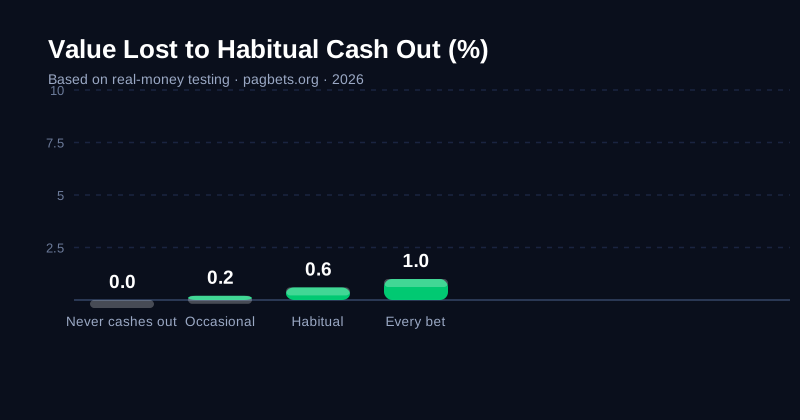
Behind any cash-out offer sits a simple calculation: the bookmaker prices your bet's current win probability from the live market, multiplies by your potential return, then discounts the result by a margin — typically 5–10% on liquid markets, more on thin ones. A bet worth $90 in fair value is offered at $82. Over hundreds of bets, accepting that discount systematically costs more than the occasional bad beat it avoids. The maths is unambiguous: cash out is insurance, and insurance has a premium.
The Three Situations Where Cash Out Is Correct
Cash out earns its premium in three specific situations. Changed information: the red card, the injury, the tactical switch — when the game has genuinely changed and your original analysis no longer holds, cashing out is acting on new evidence, not fear. Bankroll protection: when the locked-in amount is significant relative to your bankroll, certainty has real utility — protecting a 3% bankroll gain from variance is rational. Mispriced offers: during chaotic live moments (goals, wickets), offers occasionally lag the true odds and pay above fair value — rare, real, and worth grabbing.
- Changed information: red card, injury, tactical shift
- Bankroll protection: the locked-in amount matters to you
- Mispriced offers: the rare lagging live offer worth more than fair value
The Discipline Rules
Four rules keep cash out working for you instead of the bookmaker. Decide in advance: write your cash-out plan when you place the bet — the 85th-minute decision is always the emotional one. Default to letting winners run: the long-run value of winning positions outweighs the bad beats. Use partial cash out on strong positions: take profit on part of the stake, keep exposure to the outcome your analysis still supports. Never cash out on tilt: after losses, the button looks like recovery — it's the bookmaker's favourite customer behaviour.

Cash Out on Accumulators
Accumulator cash out follows the same maths with the margin multiplied across legs — and the emotional pressure multiplied too, since one leg separates you from the full payout. The correct framework is unchanged: cash out only on changed information or bankroll significance, prefer partial cash out with one leg remaining, and decide the plan when you build the acca, not when the final leg kicks off. See our accumulator guide for the full acca context.
The Honest Summary
Cash out is a tool, not a strategy. Used on changed information and bankroll significance, it's rational insurance. Used as a habit, it's a second margin paid on every bet — and the statistics are unforgiving: bettors who let winning bets run keep more value than bettors who habitually settle. Decide in advance, default to letting winners ride, and let the button be the exception rather than the rule.