Three Cards Is a Different Game From Poker
The moment a poker hand drops to three cards, the bluffing disappears and with it most of what makes poker a game of skill.
There is no bet to make after the deal, no draw, and no way to represent a hand you do not have. What remains is a ranking problem and a decision about whether the dealer will qualify. It is closer to a dice game than to poker, and it should be approached as one.
Our poker hand rankings guide covers the full poker hierarchy for context, and the table games guide places three card poker against the alternatives.
Hand Ranking and Frequency
With 52 cards, three card combinations are few enough that the frequencies are well documented.
| Hand | Cards | Frequency |
|---|---|---|
| Three of a kind | 552 | 0.24% |
| Straight flush | 48 | 0.02% |
| Four of a kind | 624 | 0.27% |
| Straight | 720 | 0.31% |
| Flush | 1,096 | 0.48% |
| Three of a kind (pair plus) | 3,744 | 1.63% |
| Pair (total) | 13,104 | 5.73% |
| High card | 27,984 | 12.23% |
The Ante/Plus Structure and the Commission Question
The main bet has two stages, ante and play, and a decision after the dealer takes the cards.
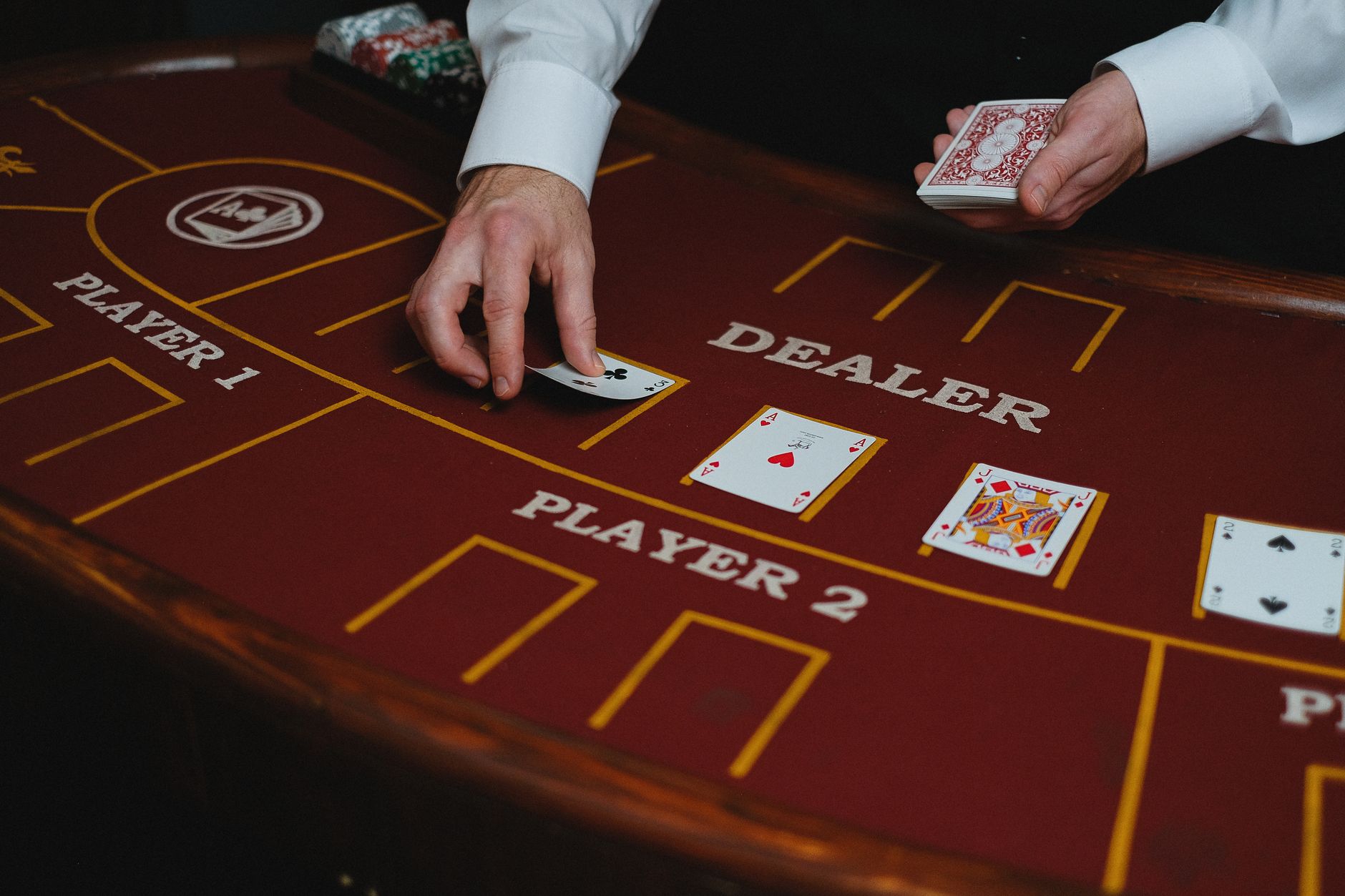
You pay an ante first. The dealer then takes your three cards, and if the hand contains a pair or better the dealer pays an ante bonus of up to three times the ante, based on the hand. You then either fold, forfeiting your ante, or place a play bet of an equal amount. The dealer turns over three cards. If the dealer has a pair or better, your play bet pays even money and the dealer's hand plays. If the dealer has only a high card, you win even money on the play bet without the hand being compared.
This structure is the reason the game is competitive. The ante bonus is effectively a side payment on a strong hand, which compensates you for the dealer's qualification edge, and the whole design is a rebalancing exercise. Our the house edge guide covers how to read the resulting numbers.
The Commission Variant Is a Different Game
Commission three card poker replaces the ante bonus with a percentage taken from wins, typically 5 percent up to a cap. The base edge is different from the ante/plus version, and it can be better or worse depending on the cap. A commission variant with no cap is materially worse than one with a 3x cap, and the cap is the single number worth checking. Tables differ, and the differences are not small.Pair Plus: The Bet That Looks Safer Than It Is
Pair Plus pays on the first two of your cards combined with the dealer's highest card forming a pair or better.
The payouts are typically 1 to 1 for a pair, 2 to 1 for two pairs, 6 to 1 for three of a kind, 30 to 1 for a straight, 40 to 1 for a flush and 250 to 1 for four of a kind. The headline figures look generous until you work out the frequencies: a pair occurs roughly 45 percent of the time, which sounds like it should be close to break-even, and the 1 to 1 payout means the edge sits almost entirely in the high tiers that rarely land.
Some tables pay 6 to 1 for a pair rather than 1 to 1, which changes the picture considerably, and that is the only version worth considering. Our the volatility guide covers the effect of the rare high tiers on your results history.
Six Card Bonus: The Most Expensive Bet on the Table
The Six Card Bonus pays on a five or six card hand made from all six cards, and the payout table is what makes it look valuable.
A five card straight flush pays 1,000 to 1 and a six card straight flush 50,000 to 1 on some layouts. The reasoning is that such hands are so rare they cannot be exploited, which is not how mathematics works. They are rare, and the payout is set below what their true frequency would justify, which is exactly how a high-edge bet is constructed.
The practical edge on Six Card Bonus runs from about 8 percent on generous pay tables to over 30 percent on stingy ones, and the pay table varies enormously between operators. It is the one bet on this table where reading the print on the felt is genuinely worth doing.
Our the game selection guide covers the same principle of comparing pay tables across operators.
What to Actually Play
The advice is short because the game is simple.
- Ante/Plus only, the main bet is the competitive part and the side bets are not
- Check the commission cap, no cap is materially worse than a 3x cap
- Fold any hand below a pair on most pay structures
- Skip Pair Plus unless the table pays 6 to 1 on a pair
- Never take Six Card Bonus, the edge is too large
- Remember no betting decisions, this is not a poker skill game
Why It Is Worth Knowing Anyway
Three card poker is a useful game to understand even if you do not play it.
It is a clean illustration of how a pay table sets an edge, with the base game competitive and every side bet carrying a large built-in cost. The same structure appears in pai gow poker, in the casino war side bets, and in most of the money wheel layouts. Understanding it once means recognising the pattern everywhere else on the floor.
Our the pai gow poker guide covers another commission-based game, and the RTP guide covers the same mathematics on slots.
A Practical Routine
Three card poker rewards discipline rather than study.
Play the main bet only on a commission structure with a sensible cap. Fold weak hands, since there is no draw to improve on. Check every pay table before sitting down, and compare the same table across two or three operators. Treat side bets as entertainment rather than strategy, and remember the game has no decisions after the deal, so nothing you learn will change the result of a given hand.
Our the wagering requirements guide covers turning a bonus into withdrawable money, and the security checklist covers checking an operator before depositing.
- Main bet only, the side bets carry 7 to 30 percent
- Check the commission cap, no cap is worse
- Fold below a pair, no draw to improve on
- Pay tables differ, shop the same table
- No post-deal decisions, do not overthink it
- Set limits with our tools guide
Working Out the Real Edge on Your Table
The stated house edge is rarely printed on a three card poker table, and it is trivially computable if you know the pay table.
For the main Ante/Plus bet, take the ante bonus schedule and the dealer qualification rate together. A dealer qualifies with pair or better roughly 50 percent of the time. The ante bonus pays up to three times the ante on a qualifying hand, and that payment is what compensates you for the roughly even chance the dealer beats you once both have played.
The practical method is simpler: find the pay table, note the ante bonus for a pair (usually 1 to 1) and for two pair (2 to 1), multiply by their frequencies, and compare the result to the ante. If the expected return on your ante is above one unit, the bet is close to even, and if it is below, that gap is the edge.
Our the house edge guide covers the method in full, and roulette bet types shows the same arithmetic on a game that publishes its edge.
Why the Ante/Plus Bet Is Genuinely Competitive
Most casino games give you a 5 to 15 percent edge, and a few give less. Three card poker is one of the few, and the reason is structural.
The ante bonus is not a bonus in the marketing sense. It is a payment that scales with hand strength, and it is calibrated so that the combination of the bonus, the play bet, and the dealer qualification rate produces an edge of roughly 3 to 8 percent depending on the schedule. Some tables, particularly those with a generous ante bonus on two pair and trips, come in below 3 percent, and those are worth finding.
That is still an edge, and it is worth being clear that no amount of strategy removes it. What strategy does is avoid the parts of the game where the edge is larger. Our the blackjack side bets guide covers the same principle, where the base game is half a percent and the side bets are several times that.