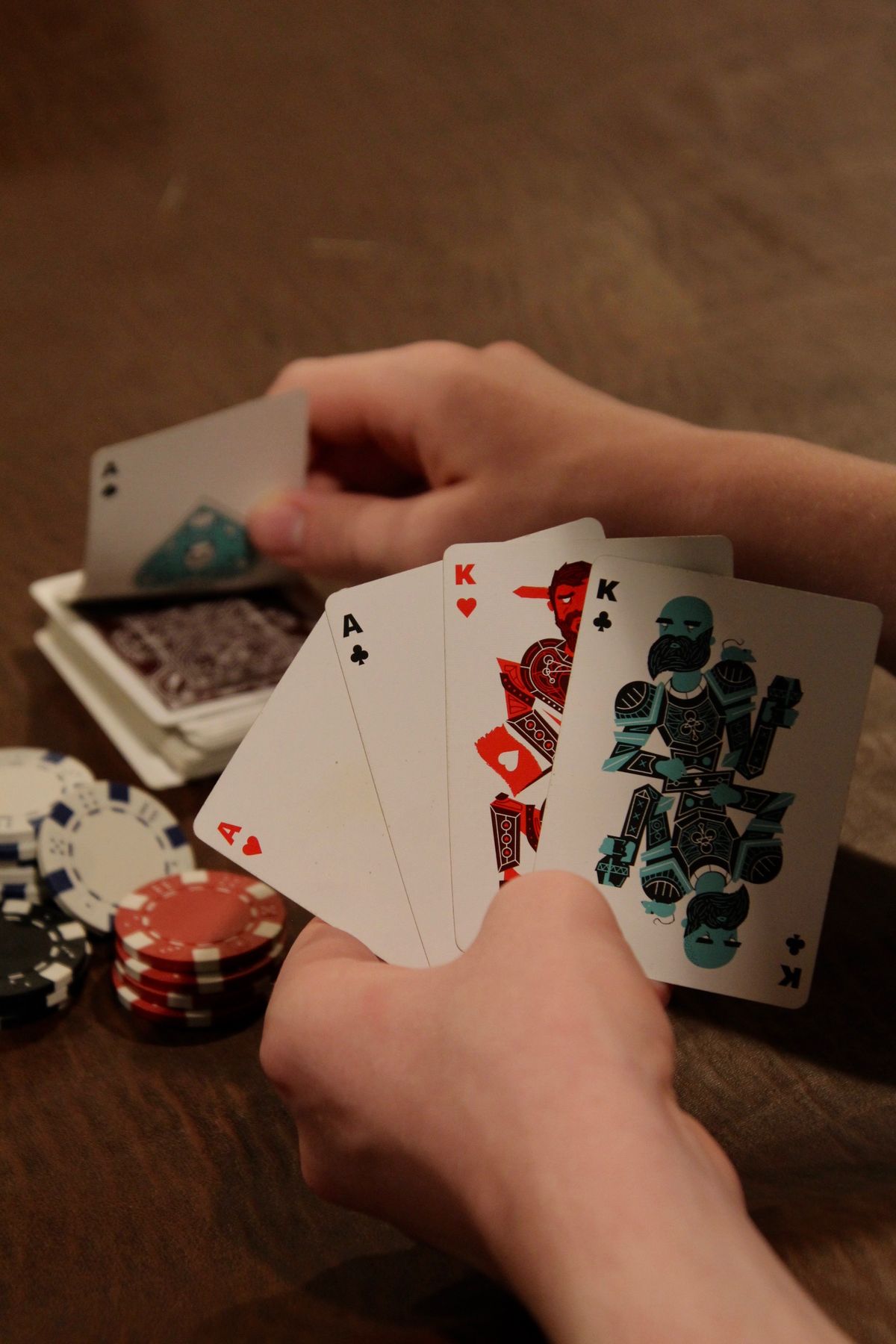
The Hierarchy That Governs Every Poker Game
Every poker variant — Texas Hold'em, Omaha, Seven-Card Stud, video poker — is built on one ten-hand hierarchy. Learn it once and it serves you everywhere. This guide ranks all ten hands with examples, explains kickers and tie-breakers, and corrects the reading mistakes that cost beginners pots.

The Ten Hands, From Strongest to Weakest
Here is the complete ladder, memorised best as five groups: the nuts (royal flush, straight flush), the big fours (four of a kind, full house), the suits and sequences (flush, straight), the pairs (three of a kind, two pair, one pair), and high card — which wins only when nobody made anything.
| Rank | Hand | Example |
|---|---|---|
| 1 | Royal flush | A♠ K♠ Q♠ J♠ 10♠ |
| 2 | Straight flush | 9♥ 8♥ 7♥ 6♥ 5♥ |
| 3 | Four of a kind | Q♣ Q♦ Q♥ Q♠ 3♦ |
| 4 | Full house | K♣ K♦ K♥ 7♠ 7♦ |
| 5 | Flush | A♦ J♦ 8♦ 5♦ 2♦ |
| 6 | Straight | 10♣ 9♦ 8♥ 7♠ 6♣ |
| 7 | Three of a kind | 9♣ 9♦ 9♥ K♠ 4♦ |
| 8 | Two pair | J♣ J♦ 4♥ 4♠ A♣ |
| 9 | One pair | 8♣ 8♦ A♠ K♥ 2♣ |
| 10 | High card | A♣ J♦ 9♥ 6♠ 3♦ |
Kickers: The Tie-Breaker That Decides Real Pots
When two hands share the same rank, the kicker — the highest unpaired card — decides. A♣ A♦ K♥ versus A♠ A♥ 9♦ is won by the ace-king hand on the king kicker. Kickers matter most with one pair, where they decide a huge share of pots. The rule: compare the five-card hands card by card, highest first. No hand ever uses more than five cards.
Reading the Board: The Mistakes That Cost Pots
Three board-reading errors appear in every beginner's game. Overvaluing straights and flushes: when the board shows four to a flush, someone usually has it. Missing the full house: a paired board means full houses are live — your flush may be drawing dead. Forgetting the board plays: if the board's five cards beat your hand, everyone remaining splits the pot with the board. Slow down on coordinated boards and ask: what is the best possible hand right now?

Probability: Why Big Hands Are Rare
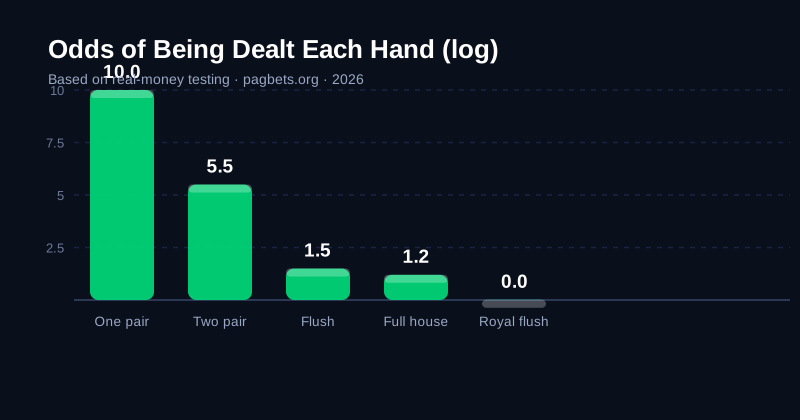
Understanding rarity stops overconfidence. In five-card poker, you'll be dealt one pair or better about half the time — but a flush comes once in ~500 hands, a full house once in ~700, and a royal flush once in ~650,000. When your opponent represents a monster hand, the maths says it's usually a smaller hand or a bluff — and when you hold the monster, bet it accordingly.
From Rankings to Real Play
Hand rankings are the alphabet; poker is the novel. Once the ladder is automatic, the next layer is position, bet sizing and opponent ranges — beyond this guide's scope but learnable through play. Start at low-stakes tables or free-play poker at a licensed casino from our casino reviews, keep the ranking table open until it's instinct, and remember: the best hand only wins the pot when you play it correctly.