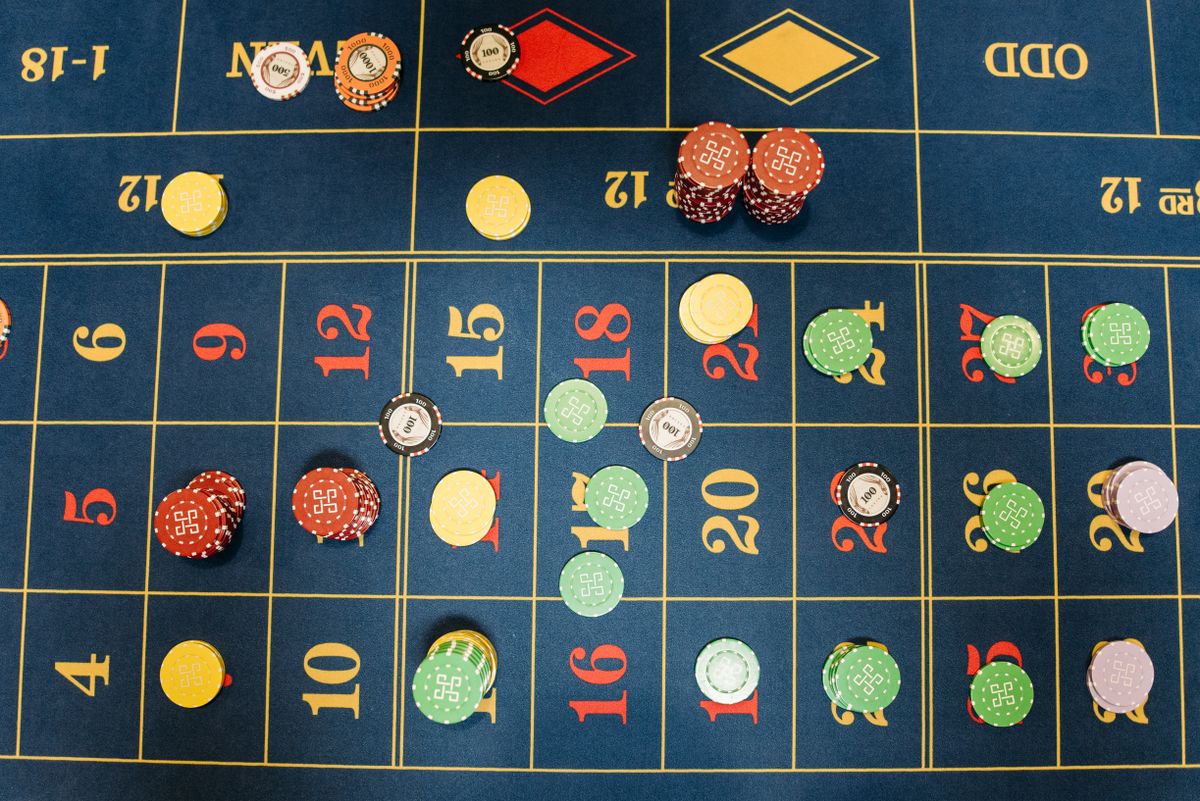
The One Fact That Explains Roulette
Every roulette bet carries an identical house edge, and understanding why removes almost all of the confusion around the game.
The edge comes from the zero pocket. On a European wheel there are 37 slots: 1 to 36 plus a single zero. An even-money bet on red wins on 18 of those slots and loses on 19, because the zero is neither red nor black. That single extra losing slot is the entire house edge, and it applies to every bet on the layout.
Split a straight up bet differently and the same 2.70% appears. This is why a roulette system that claims to beat the game through bet selection is mathematically incapable of working. Our wheel odds guide covers the structure, and the strategy guide covers why systems fail.
Every Bet, Its Payout and Its Variance
All roulette bets carry the same 2.70% edge on a European wheel. What separates them is the probability of winning and therefore the variance of the result.
The practical consequence is that choosing a low-variance bet does not improve the price; it changes the shape of the session. A bettor who cannot tolerate long losing runs will often prefer even-money bets for that reason alone, and that is a legitimate preference rather than a mathematical advantage.
| Bet | Numbers covered | Payout | Win probability | Variance |
|---|---|---|---|---|
| Straight up | 1 | 35:1 | 1 in 37 | Very high |
| Split | 2 | 17:1 | 2 in 37 | Very high |
| Street | 3 | 11:1 | 3 in 37 | High |
| Corner | 4 | 8:1 | 4 in 37 | High |
| Line / six line | 6 | 5:1 | 6 in 37 | Medium |
| Column | 12 | 2:1 | 12 in 37 | Medium |
| Dozen | 12 | 2:1 | 12 in 37 | Medium |
| Red / black | 18 | 1:1 | 18 in 37 | Low |
| Even / odd | 18 | 1:1 | 18 in 37 | Low |
| High / low | 18 | 1:1 | 18 in 37 | Low |
The American Wheel and Why One Extra Zero Matters So Much
The single most consequential decision in roulette is which wheel you sit at, and it is worth more than any system ever will be.
On a European wheel with a single zero, the house edge is 2.70%. On an American wheel with a zero and a double zero, it is 5.26% — nearly double.
The reason the difference is so large relative to its size is that the double zero adds a full losing slot to every bet, and an even-money bet goes from winning on 18 of 37 to winning on 18 of 38. That is a small arithmetic change with a disproportionate effect on the long run. Our roulette variations guide covers French and American layouts in more detail.
The Martingale Problem and Why It Fails So Often
The most popular roulette system is also the one that most reliably produces a specific and unpleasant outcome, and the reason is purely mathematical.
A Martingale bettor doubles after every loss in order to win one unit. The logic is that an even-money bet loses less often than it wins, so a sufficiently long losing run must eventually end in a win that recovers everything.
Both halves of that are true and the conclusion is still wrong. A run long enough to bankrupt the bettor occurs regularly, and it occurs at exactly the same frequency regardless of how many previous sessions were won. Our psychology guide covers the emotional mechanism, and the volatility guide covers the mathematics.
Combining Bets to Control Variance
There is one legitimate use of combining bets in roulette, and it has nothing to do with improving the price.
Spreading a stake across several positions reduces variance. A bettor betting a dozen and an even-money bet will win far more often than a bettor on a single number, while the expected return remains exactly unchanged. What changes is the shape of the session: more frequent small wins, and a much lower ceiling on the loss in a bad run.
This is a legitimate risk preference decision rather than a mathematical edge, and it is worth being honest about which one it is. The same principle appears in our trading guide, where controlling variance is genuinely valuable even at a flat expected return.
A Sensible Approach
There is no strategy in roulette, and accepting that is the whole of the good advice.
Find a European or French wheel and avoid American entirely, since that choice is worth more than anything else available. Choose your bet level to match your tolerance for variance — even-money if you want longer sessions, straight up if you want the chance at a large payout. Never change bet size in response to a losing run, because that converts a negative-expectation game into a rapid one.
Set a session limit and leave when it is reached. Our tools guide covers why a limit set in advance is the only thing that reliably works, and our security checklist is worth reading before depositing anywhere.
Inside Bets, Outside Bets and What "Inside" Actually Means
The inside and outside distinction in roulette describes where on the layout a bet sits, and it maps closely onto variance rather than onto price.
An inside bet is a bet placed on a number or a group of adjacent numbers — a straight up, split, street, corner or line. These pay more, land less often, and carry much higher variance. An outside bet is red, black, odd, even, high or low, and covers eighteen numbers with a 1:1 payout.
What the distinction does not do is change the house edge. An inside straight up and an outside red bet both cost the player 2.70% on a European wheel. This is the single most misunderstood point about the layout, and it is why a bettor who believes the outside bets are "safer" in any mathematical sense has misunderstood how the game is priced.
Our the wheel odds guide covers the probabilities, and the value betting guide covers why identical edge means a genuine bettor must choose on variance preference alone.
La Partage and En Prison Rules
Two rules on French and European wheels materially improve the player's position, and they are frequently ignored because they apply to only one bet.
La Partage applies to even-money bets. If the ball lands on zero, half the bet is returned immediately. La Partage En Prison applies the same principle differently, returning the wager to the next spin instead of half in cash.
Both reduce the house edge on even-money bets specifically, from 2.70% down to roughly 1.35% in the best case, and they apply to nothing else. A straight up bet is unaffected, so a French wheel is not a uniformly better wheel — it is a better wheel for a specific subset of bets.
The practical advice is straightforward. If you are playing even-money bets and have a choice of tables, choose the French wheel. If you are playing inside bets, the difference is negligible. Our the variations guide covers all three wheel types in full.
Practical Session Management in a Negative Game
Roulette has no strategy, so the only question worth asking is how to manage a session in a game that will, over time, take the money.
The honest approach starts with accepting the expected return and setting a time limit rather than only a loss limit. Roulette is frequently played at an even-money pace, and a player who wins a series of even-money bets can reasonably feel they are winning while the expected loss accumulates steadily. A time limit interrupts that pattern, which a loss limit alone does not.
Second, bet smaller on low-variance bets and accept that a long session is not a sign of skill. A run of red is the most ordinary event in the game and means nothing about the next spin.
Third, never increase stakes after a loss. The doubling systems fail for a specific mathematical reason covered earlier, and increasing stakes after a win is the same error in the opposite direction.
Our the tools guide covers setting limits that work, and the psychology guide covers the specific state that makes disciplined staking hardest.