A Sport Built on a Fixed Schedule
Sumo is the most statistically tractable major sport in existence, and the reason is its structure rather than anything inherent to wrestling.
There are exactly two bouts per day, fifteen days per tournament, and the same wrestlers contest them. That produces a large, clean historical sample with no fixtures published, no home and away, and no rotation surprises. A record over two hundred bouts is a genuinely reliable predictor of the next five.
The single most useful input is the rank. A wrestler two ranks above their opponent wins far more often than the odds reflect, and the market is usually correct about large rank differences while frequently wrong about small ones.
The Banzuke and Why Rank Mismatch Matters
The banzuke is the formal ranking, running from yokozuna at the top through ozeki, sekiwake, and the lower divisions. It is published in advance of every tournament, which is unusual and invaluable.
The analytical rule that holds is that rank gap predicts outcome, with a strong gradient. A top division wrestler facing a third division opponent wins roughly three bouts in four. A wrestler one rank above an opponent wins just over half the time, and that is the zone where the market is least reliable.
Our value betting guide covers the arithmetic, and the sumo application is simply to compare your own probability estimate, built from rank and recent record, with the offered price.
Kimarite and the Weight of Winning Technique
Every sumo win is a kimarite, a named technique, and the distribution of techniques a wrestler uses is public and stable.
This matters because certain techniques dominate specific rank levels. Higher-ranked wrestlers win more frequently by oshidashi and tsukiotoshi wins, while lower-ranked wrestlers rely on tarikata and slap-downs. A wrestler whose entire game is a single technique that the opposition has learned to defend is substantially weaker than their record suggests.
So the useful research is not just record but technique distribution against the specific opponent, which is public at every tournament and is very rarely priced.
Tachiai and the Unpredictable Variable
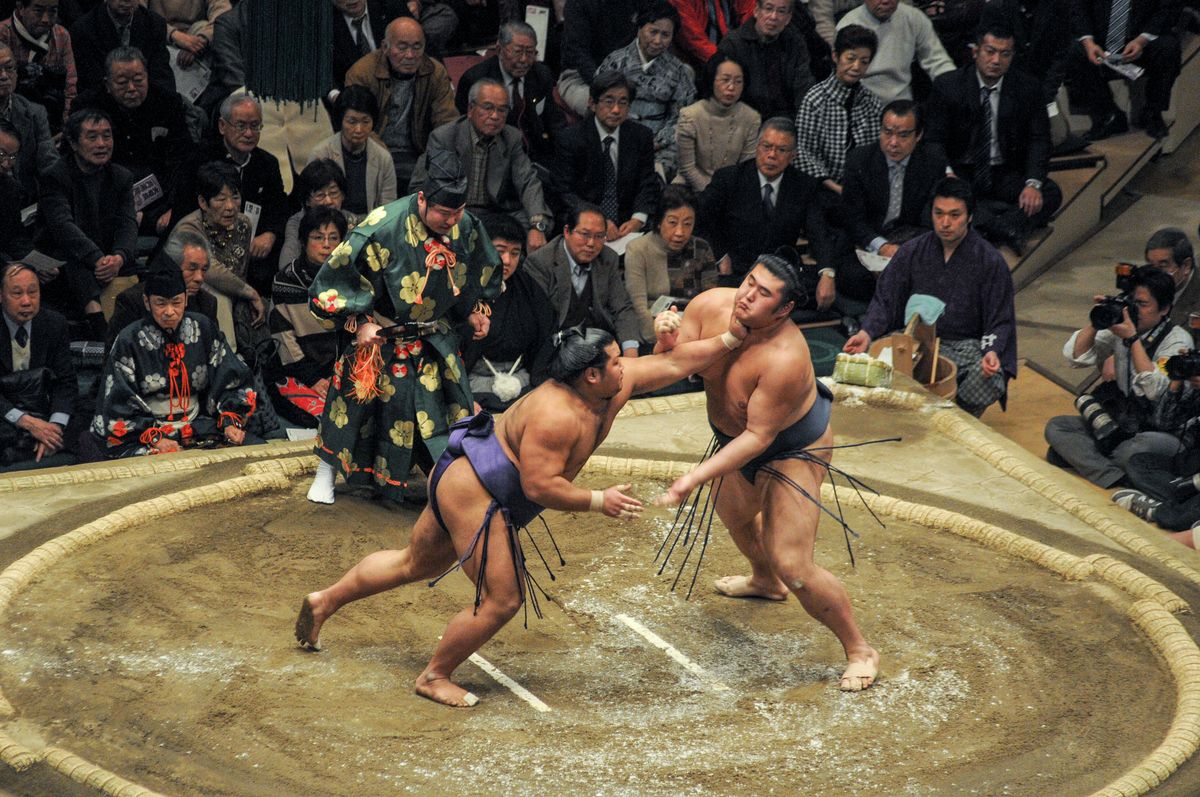
One factor dominates sumo outcomes and resists analysis almost completely: the tachiai, the initial charge at the start of a bout.
A wrestler who wins the tachiai controls the first few seconds, and the majority of bouts are effectively decided before any technique is attempted. Some wrestlers are exceptionally strong off the tachiai and some are notably weak, and that tendency is a genuine skill.
It is difficult to model precisely because it depends on timing and feel rather than on tactics, which is why the analysts who model sumo successfully weight tachiai statistics heavily rather than ignoring them. Our journal guide covers how to test whether your weighting actually helps.
Tournament Markets and Yushi Wins
Several markets are specific to the tournament structure, and understanding them prevents avoidable mistakes.
Yushi wins is settled on the most match wins in a tournament, and because a wrestler number of bouts depends on their starting rank, the structural expectation dominates. A wrestler starting low may contest more bouts than a top division wrestler, which frequently makes an unexpected yushi wins result.
Champion is a different market again, decided on the final day and highly exposed to injury, which is an unavoidable risk in a fifteen-day tournament. The two bouts per day structure also means a single bad afternoon is more damaging in sumo than in almost any other sport.
A Sensible Sumo Routine
Sumo rewards discipline and routine more than most sports, because the schedule is fixed and the data is complete.
Check rank first, then recent record over the last few tournaments, then technique distribution and tachiai tendency. Bet the match winner and avoid the champion market unless the value is clear, because injury risk there is substantial and cannot be hedged.
Record every bet across a full season rather than a tournament. Our journal guide explains why a small sample misleads, and our limits guide matters given how much action a single tournament offers.
- Check rank first, it is the strongest predictor
- Use recent record, over a few tournaments
- Study technique distribution, rarely priced
- Weight tachiai tendency, it explains many bouts
- Avoid champion bets unless value is clear
- Record across a full season, not one tournament
- Set limits with our tools guide
Injuries, Retirements and the Tournament Risk
Sumo is the sport most exposed to an unpredictable and irreversible event, and this is the single largest risk a bettor is accepting.
A wrestler competing at a makuuchi division tournament contests fifteen bouts in as many days. A single injury, often to a knee or shoulder, ends a campaign permanently for that cycle. Because the schedule is fixed, a wrestler cannot play through a problem the way a footballer can, and a withdrawal is immediately terminal.
There is no reliable way to predict it, which is why this risk cannot be hedged and should instead be priced into the stake. A bettor backing a wrestler for the championship is accepting an unquantifiable probability of losing the entire stake through no fault of the analysis, and that is a materially different product from a single bout.
The rule that follows is straightforward. Stake the match winner at a size you can afford, and stake the championship at a materially smaller fraction of that. Our limits guide covers setting the ceiling in advance, which is the only reliable protection against an event nobody can forecast.
Reading the Odds Against Rank Mismatch
Rank mismatch is the most reliable signal in sumo, and it is worth understanding precisely how to convert it into a price.
Begin with a base probability derived from the rank gap. A wrestler two ranks above wins roughly 60% of the time; one rank above wins roughly 52%; level ranks produce near even results. Then adjust for the specific matchup, using technique distribution and tachiai tendency. Then adjust for recent form over the last two or three tournaments rather than the last bout, because single results in sumo are close to noise.
Finally, compare your estimate against the price. Our odds calculator converts between the decimal and fractional formats that Japanese and European books use, and the value betting guide covers the decision rule once the estimate exists.
The key discipline is writing the estimate down before looking at the price. A bettor who forms an opinion while already looking at the odds has anchored on them, and the anchoring effect is large enough to produce a bet on almost every bout.
Betting Markets Available Outside the Bout Winner
Outside the standard bout winner market, sumo offers a range of props that are covered by less money and priced with less analysis.
The basho market is interesting because it depends on technique. A wrestler with a high oshidashi rate and a low tarikata rate has a meaningfully different basho probability than their overall win rate suggests, and the two numbers diverge enough to be exploitable.
The first bout or second bout performer markets are structurally driven rather than predictive, which makes them a poor bet, but the win in the final day market behaves differently because finalists are often different wrestlers from the favourites, particularly when a leader is carrying an injury.
Our darts markets guide covers the same principle in another precision sport: the more specific a market is, the less efficiently it tends to be priced, and that is both the opportunity and the trap.
Betting on a Full Tournament Without Overexposure
A sumo tournament offers far more betting volume than most bettors realise, and managing that volume is the actual skill.
Fifteen days at two bouts per day means roughly forty-five to sixty bout markets per tournament, plus championship, yushi wins and a range of props. A bettor placing three bets per day across two tournaments a month is placing well over 300 bets a year without ever intending to.
The practical control is a pre-tournament stake plan rather than a per-bet decision. Setting a total tournament budget and dividing it by the number of bets expected means each individual bet is a fraction of a predetermined allocation, which prevents the most common failure mode: staking normally on quiet days and staking the accumulated budget on an exciting final day.
Our journal guide covers structuring that record, and the odds calculator is useful for converting the fractional prices that Japanese books display.
Where Sumo Differs From Every Other Major Sport
Sumo is worth treating separately from other sports for three reasons, and each one changes the approach.
First, the schedule is fixed and fully public weeks in advance, so there are no fixture surprises and no rotation questions. Second, the rankings are published before the tournament, so the key variable is known rather than inferred. Third, there is no home advantage whatsoever, because every bout takes place in the same ring.
Combined, these mean sumo offers more usable public information than almost any other sport and considerably less uncertainty about the fixture itself. What remains unpredictable is the execution of an individual bout, which is why the analytical work concentrates on matchup characteristics rather than on situational context.
Our the baseball guide and the hockey guide cover the two comparable North American sports, and the contrast with sumo makes clear how much of ordinary sports betting is about context rather than about the event itself.