The Dream, Mechanically Explained
Progressive jackpots are the casino's best marketing — and like all good marketing, they're built on a mechanism worth understanding. Every spin on a progressive game sends a small slice of the stake (typically 1–2%) into a shared prize pool. The pool grows across every casino on the network until someone hits the jackpot, then resets to a seed and starts again. The dream is real; so is the tax that funds it. This guide explains both sides.
The Funding Mechanism: Why RTP Drops
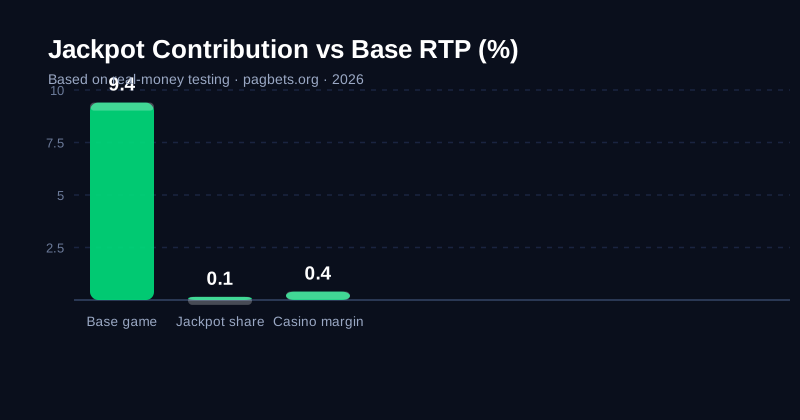
Here's the trade-off every jackpot player accepts, usually without knowing: the jackpot contribution comes out of the game's normal returns. A slot with a 1.5% jackpot contribution and a 95% published RTP pays only 93.5% back in regular wins — the missing 1.5% buys your lottery ticket for the big prize. Over a long session of chasing, the base game bleeds noticeably faster than a standard slot, and the jackpot chance, at one in tens of millions per spin, rarely compensates.
| Component | Typical value | What it means |
|---|---|---|
| Jackpot contribution | 1–2% per spin | Funds the shared pool |
| Base game RTP | 93–95% | Regular wins feel thinner |
| Jackpot odds | 1 in 10M–50M per spin | Lottery-level rarity |
| Seed amount | $100k–$1M+ | Where the pool resets after a win |
The Famous Jackpots and Their Records
The two giants of the genre: Mega Moolah (Microgaming), which holds the record for the largest online slot payout at over €19 million, and Mega Fortune (NetEnt), which has paid multiple eight-figure wins. Both run across hundreds of casinos, which is why their pools grow so fast. Newer network jackpots from Pragmatic Play and Playtech operate on the same mechanics. Every one of them pays — at licensed casinos — and our casino rankings only include verified operators.
Is There a 'Right Time' to Chase a Jackpot?
The honest answer is nuanced. Because the jackpot contribution accumulates, a jackpot that has grown well past its average hit point technically offers better expected value than a freshly reset one. Some serious players track average payout sizes and only play above them. The catch: the improvement is small relative to the variance — even a "ripe" jackpot is still a one-in-millions lottery ticket, and the base game still bleeds. For recreational players, the right time is simply whenever the play is within your entertainment budget.
The Honest Summary
Progressive jackpots are the most expensive entertainment in the casino, priced in reduced RTP and lottery odds — and they're also the source of the biggest wins in gambling history. The intelligent version of the dream: understand the funding mechanism, keep jackpot play inside a dedicated entertainment budget, and let the life-changing win remain exactly what it is — a wonderful, vanishingly unlikely surprise.