What Plinko Is
Plinko began as a television game where a contestant dropped a disc down a peg board and won whatever the slot at the bottom paid. Crypto casinos turned that into a one-button betting game: choose a stake, press drop, and watch the ball bounce into a multiplier.
The format is popular because it is simple and fast, and because the board animation makes it look like something is happening. In betting terms it is a random draw with a visual layer.
How the Board Actually Works
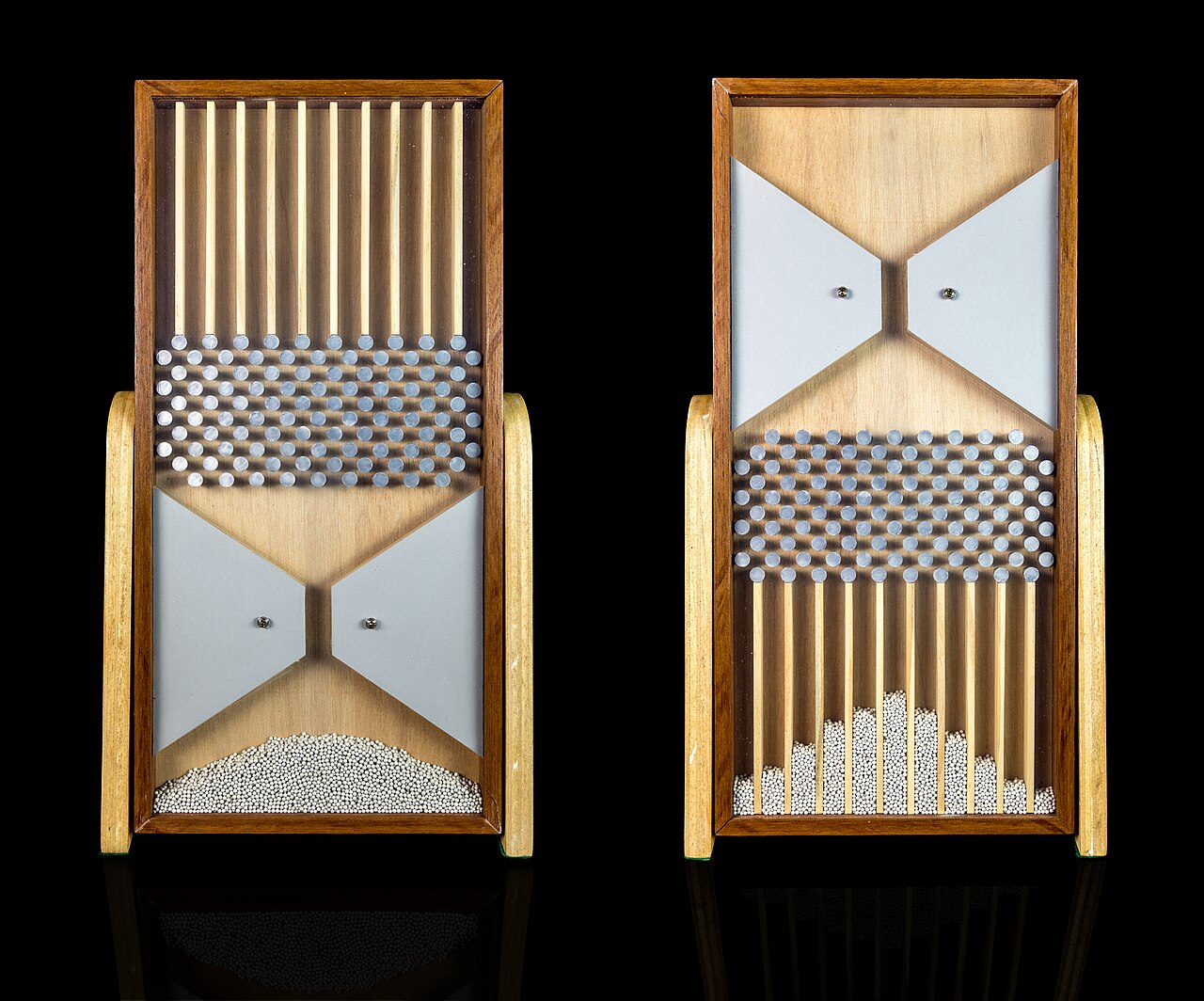
The board is rows of pegs. At each peg the ball goes left or right, and after the last row it lands in one of a row of slots. That structure produces a binomial distribution: the middle slots are hit most often and the edge slots rarely.
This is the whole mechanism, and it explains the paytable. The slots that are hardest to reach pay the most; the ones in the middle pay least. Nothing in the animation changes the odds, however it looks.
The Multiplier Slots and the Paytable
A typical row runs from a high multiplier at one edge to a high multiplier at the other, with small values in the middle. The exact numbers differ by site and by risk setting.
| Slot position | Chance of landing | Payout shape |
|---|---|---|
| Edge slots | Rare | Highest multiplier |
| Near-edge | Uncommon | High |
| Centre | Most frequent | Lowest |
RTP and House Edge
The edge is built into the table. If you weight every multiplier by the chance of hitting it, the total comes out just under the stake, and the gap is the operator margin. A higher-risk mode raises the top multipliers but also the gap between outcomes.
That is why RTP is a long-run figure rather than a promise per session. Our house edge guide covers the arithmetic.
Variance and Why the Middle Matters
Most balls land near the centre, so most spins return less than the stake even when the edge is small. The game recovers that expectation through the rare high multipliers.
In a short session you can sit on the centre slots for a long time and feel the game is cold. It is not; you are simply sampling the most probable outcome, which is a small loss.
Provably Fair Plinko
Where Plinko is an original, the operator often publishes a seed-based fairness system. You can verify that a result was not changed after the fact, which is a real trust feature even though it does not improve the odds.
Our BC.Game review covers how provable fairness works at one operator.
The Pattern and Prediction Myths
Three claims circulate, and none survives the mechanism.
- Slots are "due" — past results do not change the next bounce.
- A timing trick works — the drop is not aimed.
- A pattern reader predicts — each peg is close to a coin flip.
Stake Sizing on a High-Variance Game
Because the paytable is skewed, the same bankroll lasts very differently at different stakes. A sensible approach is to set a session budget you can lose without consequence and keep the stake a small fraction of it.
Our bankroll guide covers the sizing method, and volatility explained covers why a high-variance game swings.
Plinko as an Original
Because Plinko is usually an in-house original, the operator controls the rows, the paytable and the published RTP. That is different from a provider slot, where a studio fixes the maths. Two sites can both offer Plinko and be quite different games.
Plinko vs Slots and Crash
Compared with slots, Plinko has no reels, no features and no bonus round — just a distribution. Compared with crash games, it has no cash-out decision. It is the simplest of the three, which is both its appeal and its limitation.
The Caveats
Three things are worth knowing before you deposit.
- RTP varies — it is operator-set, so read it.
- No strategy exists — there is no decision to optimise.
- Speed is the risk — fast rounds can outrun a budget quickly.
The Risk Settings Most Sites Offer
Plinko usually ships with two or three risk levels, and they change the paytable rather than the board. Low risk flattens the row: smaller edge multipliers, more of the payout concentrated near the centre. High risk pushes the money to the edges and leaves the centre paying very little.
The important point is that the setting is a volatility dial, not a value dial. A high-risk table has a wider spread and a heavier long-shot tail; it does not turn a losing game into a winning one. Choose it for the style of session you want, not because one table claims a better return.
What a Fair Payout Would Look Like
If the paytable were fair, every multiplier weighted by the chance of landing in that slot would sum to exactly one. Real tables sum to slightly less, and the shortfall is the operator margin.
That is why two sites can show the same board and different returns. The rows and the animation look identical; the numbers underneath are set by whoever runs the game. Reading the published RTP is the only way to compare them honestly.
Plinko Across a Whole Session
In a short run the ball lands near the centre often enough that the session feels flat, even though a few drops reach the high slots. Over a longer run the shape becomes visible: many small returns, a handful of larger ones, and a net result that tracks the edge.
That shape is the reason a session budget matters more than a target multiplier. You cannot steer the ball, so the only variable under your control is how much each drop costs and how many you take.
Why the Centre Always Wins the Count
The bell-shaped distribution is not a quirk of one board; it is what any fair peg layout produces. A ball that has ten chances to go left or right spends most of them near the middle, because there are far more paths that end in the centre than paths that end at an edge. Count the routes and the shape appears on its own.
This is why the centre multipliers are small. A game that paid the centre well would be a game with no edge, and no operator runs one. The slot that looks boring is the slot most players actually hit, which is the quiet truth behind every Plinko session.
Over hundreds of drops the proportions settle close to the expected shape. A dozen drops can look wildly uneven — a run of centre hits, then a surprise edge — but that is sampling noise, not a change in the board.
The Edge Versus the Display
The animation is a display layer on top of a price. When you press drop, you are buying a draw from a distribution, and the payout table prices that draw slightly above its true probability. The pegs and the sound are there to make the purchase feel like a moment, but the economics are fixed before the ball moves.
That framing is useful because it stops the search for a hidden trick. There is no aim, no rhythm and no readable sequence, so the only decisions left are the stake, the risk setting and whether to stop.
Where Plinko Fits Among the Originals
Provably fair originals cluster around a few ideas: a dice roll, a multiplier that climbs, a grid of tiles, a falling ball. Plinko is the simplest of them because it asks for nothing after the drop. That makes it a good fit for players who want a clean, fast bet without a decision, and a poor fit for anyone who wants the game to reward attention.
If you like the idea of a multiplier but want a decision in the middle, Mines or a crash game gives you one. If you want no decision at all, Plinko is the purest version. Our table games guide covers where each shape sits.
None of them, Plinko included, offers a way around the edge. The honest choice is about which kind of session you want, not which game pays best.
The Honest Position
Plinko is a clean, well-made random game with no hidden skill layer. Play it for what it is, at a stake you can afford, and ignore anyone selling a pattern. Our responsible gambling guide covers the warning signs if it stops being fun.
✓ What We Like
- Explains the binomial shape rather than guessing
- Uses the multiplier table to show where the edge sits
- Separates variance from bad luck
- Honest that no pattern reading works
✕ What Could Improve
- The board is not standardised, so paytables vary by site
- RTP depends on the operator setup
- High variance makes short sessions misleading