The Betting Edge You Get by Watching
Live streaming changed in-play betting from a guess into a research exercise. The key insight: when you watch the game, you see things the odds haven't priced yet — a team dominating without scoring, a striker limping, a basketball team executing half-court sets successfully. The live market reacts to the scoreboard faster than it reacts to the quality of play, and that gap is where informed live bettors find value. This guide covers how streaming works at bookmakers and which sites stream the most — and how to use what you see.
The caveat: the edge disappears fast. A live stream has 2–5 seconds of latency, and odds updates arrive faster. Your advantage exists between events — during set pieces, timeouts and tactical pauses — not during continuous play.
Which Bookmakers Stream the Most
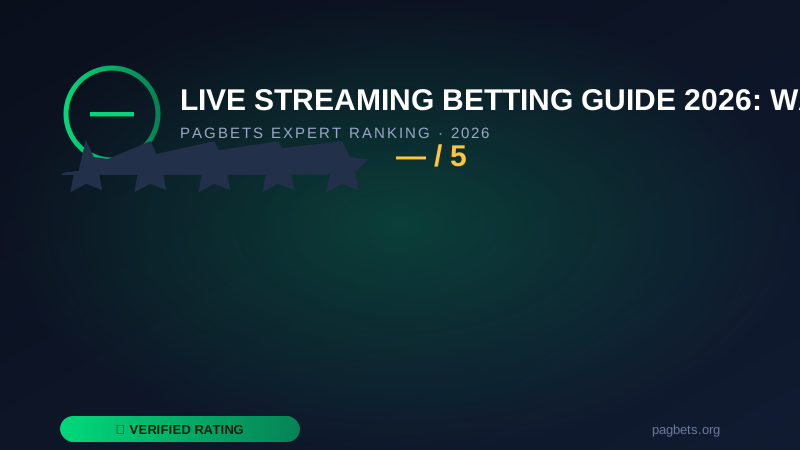
Bet365 leads massively: 100,000+ events streamed yearly across football, cricket, tennis, basketball, horse racing and more. Betway covers major football and is the best esports streaming destination among bookmakers. 1xBet has wide sport coverage but lower stream quality. Stake streams selected live events alongside its crypto-native casino. Full comparisons in our rankings.

| Bookmaker | Annual events streamed | Best leagues covered |
|---|---|---|
| Bet365 | 100,000+ | Premier League, La Liga, Serie A, NBA, tennis |
| Betway | Major football + esports | Premier League, Champions League, CS2, LoL |
| 1xBet | Wide but lower quality | Football, cricket, basketball |
| Stake | Select events | Football, tennis, major events |
How to Access Live Streams
Access requirements vary slightly between bookmakers. Most require one of: a funded account (at least £/$1 balance), or a bet placed within the last 24 hours on any sport. Simply log in, navigate to the event page or the live betting section, and the stream starts automatically where available. No additional subscription or download is needed — the stream runs inside the browser or app directly.
- Bet365: funded account or bet in last 24 hours — available across all regions where licensed
- Betway: funded account — UK and European sports plus global esports tournaments
- 1xBet: funded account — widest sport coverage, stream quality varies by region
- Stake: account required — selected live events alongside the sportsbook
Using Live Streams for Smarter Betting
Watching live beats live betting reactively. The strategies that hold up: pre-match analysis on matchups before the stream starts (so you know what to watch for), between-event windows for placing bets (don't bet during play), and cash-out decisions made by watching the game state, not the odds movement. The biggest edge is seeing things the market hasn't priced: tactical changes, fitness drops, set-piece effectiveness. Our live betting guide covers the mechanics in full.
Discipline still matters: watching a game live increases the urge to bet, not the quality of bets. Our live betting psychology guide covers the traps.
Mobile Live Streaming
Mobile streaming works inside the same app as betting. The experience is optimized for split-screen on Android and picture-in-picture on iOS — stream on one side, bet slip on the other. All stream providers support mobile in 2026; quality matches the desktop experience. The one practical tip: use Wi-Fi where possible, as streams consume 500MB–1GB per hour at 720p.
Getting Started
Open a Bet365 or Betway account through our rankings (both offer the best football streaming), fund with $10 or more via a method you'll use later, navigate to any live football match and start watching. Place small in-play bets while watching to learn the rhythms of live betting before increasing stakes. The stream is free; the edge is earned by watching carefully.
See our football strategies and live betting guide for how to use what you see.
Streaming Improves Your Information and Your Bias Together
A live stream gives you more information and it also makes you react faster, which is not the same thing.
The information is real: you can see the shape of the game, whether a team is pressing or merely possession, and whether a substitution will change the pattern. The bias is that watching makes you feel the need to act on every movement, and in-play margins are wider precisely because most viewers do. Our the in-play risk guide covers the discipline this requires.
What Streaming Does Not Tell You
A broadcast shows you what happened and almost none of what it means.
Expected goals, the shot-quality breakdown and the tactical shape are all available as data and almost none are visible on screen. A bettor making decisions from a broadcast is working from the same information as a casual viewer plus a sense of urgency. Our the expected goals guide covers what the data adds.
Latency: The Number That Decides Whether Streaming Helps
Bookmaker streams typically run two to five seconds behind the live broadcast feed, while in-play prices update every second or faster. That gap is the whole basis of the streaming advantage, and it also explains why the advantage is so easy to waste. By the time a goal appears on your screen, the price that reflected it has already moved.
So the edge is not in reacting to what you have just seen. It is in acting during the delay, before the market has finished processing the same information. Concretely: if the stream is three seconds behind and the price takes five seconds to settle after a red card, there is a two-second window in which the market is still offering the pre-red-card price while you can already see what is coming.
You can measure your own latency. Watch the feed, note the exact moment a decisive event happens on screen, then note the moment the corresponding odds reach their settled level. Repeat over ten events and the average gap is your personal delay. Anything above about four seconds and the streaming edge is largely theoretical.
Until you have that number, treat streaming as a research tool rather than an execution one. Our live betting guide covers placing bets efficiently once the timing is understood, and the in-play risk guide covers the staking limits that keep fast decisions affordable.
Why the Stream You Want Is Missing
The most common streaming complaint is not that the video buffers. It is that the event you want is simply not on the bookmaker's list. That happens because bookmakers buy broadcast rights on a territorial basis, exactly like the broadcasters do, and the feed you see is the feed they have licensed for your country.
In Britain, Premier League and top-flight rights have been split between competing broadcasters in recent seasons, so no single account carries every fixture. In the United States the split runs the other way, with different games on cable, broadcast and streaming platforms. Tennis is worse: a single tournament can have a dozen separate national partners, and which one you get depends on where the account was registered.
There is a second reason a stream disappears: the bookmaker holds a licence from one regulator and streams only the sport that licence permits. A casino-first operator with a gaming licence will often show no sport at all, while a full sportsbook licence lets it carry the mainstream leagues. Our gambling licences guide sets out which licence type covers which product.
Before you pay attention to anything else, check the coverage list on the event page of the site you hold an account with. If the fixture is not listed, no amount of latency work will help, and the sensible response is to find another bookmaker rather than to hunt for a workaround that will not exist.
What to Actually Watch For: A Working Checklist
Before kickoff, write down what you are actually looking for. Most streaming bettors watch passively and then explain the match after it happens, which is backwards. A usable pre-match list is short: the confirmed lineup, the shape each side used last time out, the referee's card average, and the two players whose fitness could change the plan.
In-play, watch structure rather than possession. A team with 60% of the ball and no entries into the box is not pressing, and a side conceding cheap chances while holding possession is worse than one being dominated. Second shots, throw-ins won deep, and the quality of the crosses tell you more than the scoreline does, and all of it is visible in a stream.
Change your checklist by sport. In basketball, the signal is rotation and timeout usage rather than shot percentage, because a coach pulling a starter early is stating a result before the score reflects it. In tennis, the signal is the hold pattern and whether a server has gone to a second serve, which is worth far more than the game count.
Be honest about the downside: most of this confirms a view you already held rather than creating one, and the market has already priced most visible things. Our expected goals guide covers what the broadcast genuinely cannot show you, which is the quality of the chances being created.
✓ What We Like
- Tells you how to check a licence rather than asking you to trust one
- Explains the tax structure, which is the part that sets the price
- Uses named regulators, laws and figures rather than general description
✕ What Could Improve
- Applies to one jurisdiction, so it does not transfer to your market
- A limit or ceiling constrains how much you can actually stake