One Fight, A Hundred Markets
UFC betting is structurally different from team sports: a single fight produces dozens of markets — moneyline, method of victory, exact round, over/under rounds — and the entire card reprices weekly. The defining feature is variance: one punch ends any fight, judges remain unpredictable, and heavy favourites lose far more often than their team-sport equivalents. That variance is what makes UFC markets inefficient — and it's what rewards bettors who analyse matchups properly instead of following records.

The Core Markets
Moneyline is the simplest: pick the winner. Method of victory splits the win into KO/TKO, submission or decision — the UFC's signature market, and often better value than the moneyline when a fighter's finishing tendencies are clear. Round betting covers which round the fight ends, with grouped options (rounds 1–2, 3–4, decision). Over/under 2.5 rounds is the totals market: will the fight go the distance or finish early? Each market rewards different analysis — know which your research actually supports.
| Market | What it tests | Analysis needed |
|---|---|---|
| Moneyline | Who wins | Full matchup breakdown |
| Method of victory | How they win | Finishing tendencies, opponent's defence |
| Over/under 2.5 | Fight length | Cardio, styles, finishing rates |
| Exact round | When it ends | Pacing patterns, early vs late finishers |
The Five-Factor Fight Analysis
Serious UFC bettors run five factors before touching a line. Stylistic matchup: striker versus grappler — the classic chess match, and the first question every fight asks. Physicals: reach, height, weight-cut history — a 4-inch reach advantage changes the striking maths. Cardio: five-round fights belong to the fighter with the deeper gas tank; three-round fights favour early output. Trajectory: age and mileage — fighters decline in visible, predictable patterns. Camp news: late opponent changes, weight-cut struggles, injury whispers. Five factors, checked weekly, beat surface-level record reading every time.

The Variance Trap: Why Big Favourites Burn Bettors
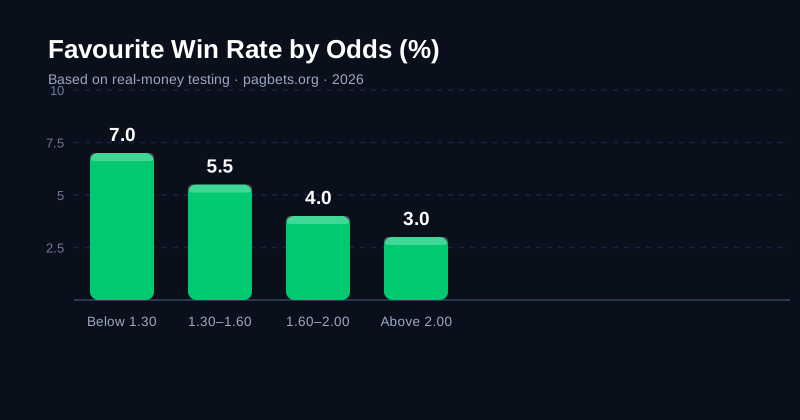
UFC's low-event structure means variance dominates: a single mistake ends a fight, and judges' scorecards remain the sport's most debated feature. Heavy favourites under 1.30 lose far more frequently than the market's implied probability suggests to casual bettors — which is precisely why the market can be beaten by those who specialise. The counter: avoid betting huge favourites entirely (there's no value at those prices), and size MMA bets smaller than team-sport bets. Variance is the cost of the inefficiency.
Live UFC: Bet Between Rounds Only
Live UFC prices move violently — a knockdown flips the moneyline instantly. The disciplined pattern: bet between rounds only, after assessing damage, cardio and corner instructions, never during exchanges. Round breaks are the market's natural pause, and the fighters' body language during them is real information the live price hasn't fully absorbed. Cap live bets per event and follow the psychology rules — MMA compresses emotions faster than any sport.
Getting Started With UFC Betting
Pick a weight class, follow its contenders for two events without betting, and build simple fighter profiles — finishing rates, cardio patterns, stylistic matchups. Then paper-trade method-of-victory and over/under lines before staking. Open accounts at two bookmakers from our rankings, compare moneyline prices (they differ more in MMA than most sports), flat-bet 1–2% of bankroll, and treat every fight card as a marathon, not a sprint.