Why Gambling Myths Survive
Gambling myths persist because they feel intuitive and because the industry has no incentive to correct them. 'The machine is due', 'I'm on a streak', 'doubling up always recovers' — each belief offers a sense of control over randomness, which is precisely what the human brain craves. This guide debunks twelve of them with the maths, in plain language. None of this is moralising; it's simply what the numbers do.
Myths 1–4: The Maths of Randomness
The four most expensive beliefs in gambling, all variations of the same error — believing past outcomes change future probabilities.
- 1. 'The machine is due.' False. Each slot spin is independent; RTP is a long-run average, not a debt the machine owes you.
- 2. 'This number is overdue on roulette.' False. The wheel has no memory; 37 pockets remain 37 pockets on every spin.
- 3. 'I'm on a lucky streak.' False. Streaks are statistical noise. Believing in them leads directly to over-staking.
- 4. 'Nine reds in a row means black is coming.' False. Independence means the next spin is 47.4% red, every time — the gambler's fallacy in its purest form.
Myths 5–8: Systems and Strategies
The systems that promise to beat the maths — and the reason none of them do.
| Myth | Reality |
|---|---|
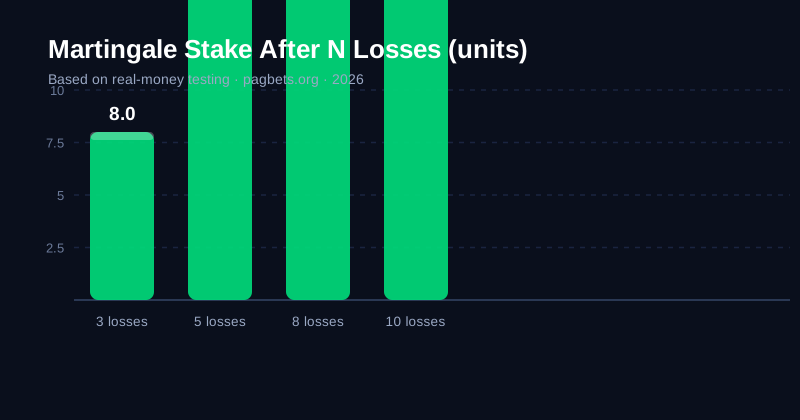
| 5. Martingale wins reliably | It survives until one long streak wipes out every previous win. |
| 6. A staking plan changes the edge | Staking changes variance, never the house edge. |
| 7. Hot machines pay more | Machine temperatures don't exist in RNG software. |
| 8. You can predict crash multipliers | Crash points are generated from seeds; past rounds predict nothing. |

Myths 9–12: Betting and Bookmakers
The beliefs about sports betting specifically — where a real edge exists, but not where most players look.
- 9. 'The bookmaker wants me to lose, so they fix results.' False. Bookmakers profit from margin on volume, not from individual results — fixing outcomes would be both illegal and unnecessary.
- 10. 'Accumulators pay better, so they're better value.' False. Odds multiply, and so does the margin. Long accas are the highest-margin product in betting.
- 11. 'I always lose because I'm unlucky.' False. The house edge guarantees the average player loses; nothing personal is happening.
- 12. 'Tips from groups are profitable.' Overwhelmingly false. If a tipster genuinely beat closing prices, selling tips would be the worst possible use of that edge.
What Actually Works
Strip away the myths and the honest toolkit is small: compare prices across two or three bookmakers, take bonuses only when the maths works, flat-stake within your bankroll rules, keep records, and treat the house edge as the price of entertainment. That's the entire realistic version of 'beating' gambling. Everything else is variance wearing a costume.