How a Wheel Actually Works
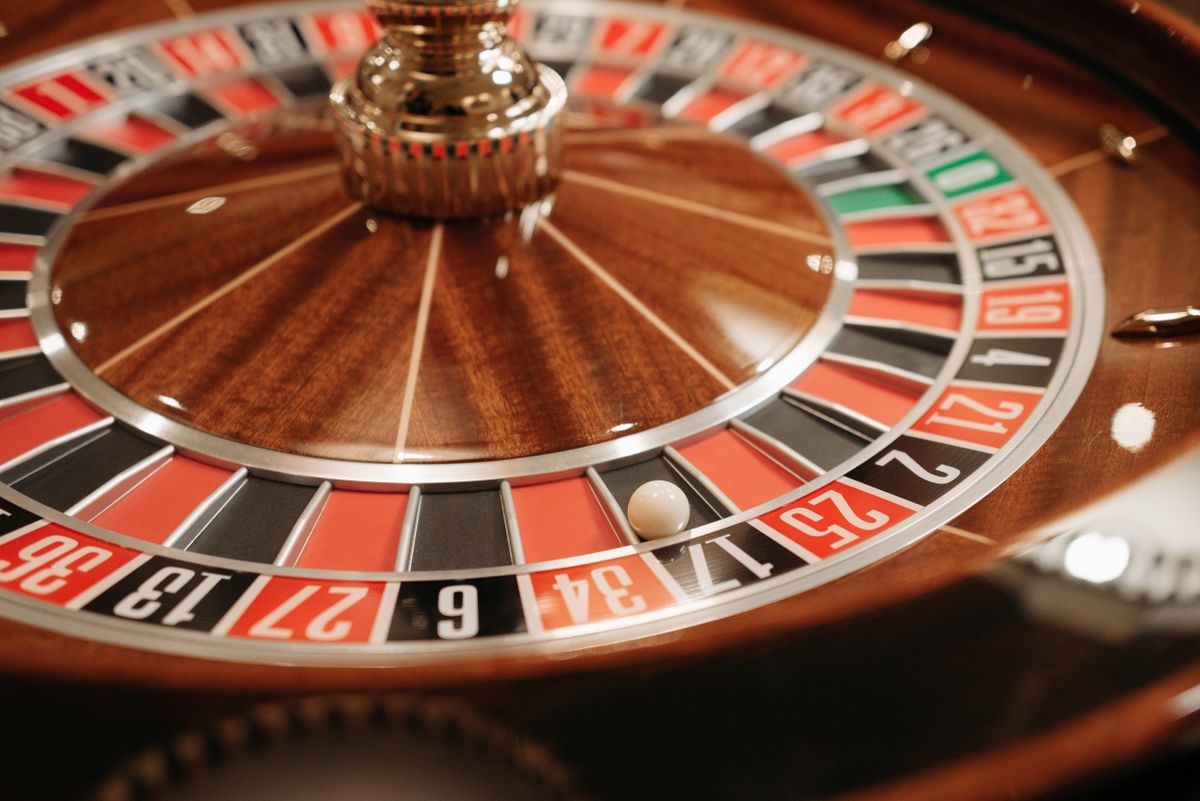
A roulette wheel is a simple machine and understanding its mechanics is the fastest way to see why it cannot be predicted.
The ball is released from a fixed point, travels around the outer bowl and loses energy continuously. At some point it falls through to the inner wheel, rotates around the numbered pockets, and finally drops into one as its speed drops below the threshold required to climb the pocket wall.
The key variable is how many rotations it completes after falling to the inner wheel, and that number varies with the release speed, the slope, the ball condition and the wheel. Our the wheel odds guide covers the probability side.
The Claims and Why Each Fails
Every roulette system sold rests on one of a small number of claims about the wheel, and each has a specific physical reason for failing.
| Claim | Why it is believed | Why it fails |
|---|---|---|
| The wheel is predictable | Sequence appears ordered | Rotation count varies each spin |
| The croupier signals the result | Patterns in their arm | They cannot control the ball |
| Bias towards a segment | Adjacent numbers look related | Bias needs millions of spins to matter |
| Hot numbers repeat | Recent numbers feel due | Draws are independent |
| Racing around the wheel | Feels like it could work | You would need the exact release speed |
Why Neighbour Systems Fail Specifically
Neighbour systems — betting on the numbers physically adjacent to a recent result — fail for a reason that is worth stating precisely, because the intuition behind them is reasonable.
The intuition is that if 17 came up, the ball finished near 17, so a ball released similarly will finish nearby. The flaw is that the release is not the same. The number of rotations after the ball drops to the inner wheel is the determining factor, and it varies from spin to spin.
So a neighbour bet is not a slightly weak version of a real edge. It is a bet with no edge at all, carrying a standard house edge, arranged in a pattern that feels meaningful. Our the strategy guide covers the general failure mode.
Bias Exists in Theory and Not in Practice
A physically biased wheel is a real phenomenon, and it is also the single most important thing a roulette bettor should understand about it.
A wheel can genuinely develop an imperfection that favours one pocket, and the effect is real mathematics. But the effect is tiny — a fraction of a percentage point — and it only becomes detectable after an enormous number of spins.
Any casino running a live wheel in a regulated jurisdiction is therefore strongly incentivised to detect and remove bias, because a known bias is a known vulnerability. By the time a bettor could find a pattern, the wheel has been replaced. Online wheels use a random number generator and the physical possibility does not exist at all.
On Selling Systems
Roulette systems are a legitimate business model for the people who sell them, and not for the people who buy them. A system that produces frequent small wins and occasional total losses will convince a large majority of its buyers, because most never play long enough to see the losses. That is a description of the social dynamics, not an argument that the system works.
What the Physics Does Tell You
Understanding the wheel is genuinely useful, even though it is not useful for prediction.
It tells you that the European wheel is the one to play, because a single zero gives a house edge of 2.70% against the American wheel's 5.26%. It tells you that the wheel sequence matters for nothing except identifying which bets are on adjacent pockets. And it tells you that no bet changes the edge, because all of them are resolved by the same unpredictable mechanical process.
It also explains something that confuses people: a wheel can be physically examined, spun by hand and observed closely, and still produce a random result. The randomness is in the physics, not in a lack of information. Our the house edge guide covers why that cost is unavoidable.
- European wheel, always, 2.70% against 5.26%
- No bet changes the edge, all resolve the same way
- Sequence is meaningless, rotations vary
- Bias is real but undetectable, and regulated away
- Never increase stakes after a loss
- Set limits with our tools guide
Bias Detection and Why It Requires More Data Than Exists
A biased wheel is a real phenomenon, and the arithmetic of detecting one is worth understanding because it explains why the answer is always no.
To detect a bias of a fraction of a percent reliably, a bettor needs on the order of tens of thousands of spins of a single number. No player accumulates that, and more importantly the wheel is replaced long before anyone could.
That is the practical answer to every bias claim: even if a bias exists, the bettor who could find it does not play long enough to exploit it, and the casino that would be harmed by it has both the incentive and the data to detect it first. Our the variations guide covers the wheel types in use.
Why Some Wheels Have a Slightly Higher Edge
There is one real difference between roulette variants that is not about bias at all, and it is about the wheel's rule set.
The French wheel with a single zero and the La Partage rule halves the loss on even-money bets, reducing their effective edge to roughly 1.35%. The European wheel with a single zero and no such rule runs at 2.70%. The American wheel with a double zero runs at 5.26%.
So the choice of wheel is a genuine decision worth about four percentage points, and it is the only real variation available in the game. Everything else is a bet selection that does not change the edge. Our the bet types guide covers the selection side.
The Racetrack Bet and Why It Is a Repeatable Mistake
The single most repeated error in roulette is returning to a previous bet, and it is worth addressing directly because the reasoning feels sound.
The argument is that the number must come up eventually, so continuing to back it improves the chance. The error is that a negative-expectation bet does not improve with repetition. Each spin is independent, and each spin carries the same house edge.
What actually happens is that a racetrack bettor experiences long winning runs because the number does come up eventually, and those runs are the visible evidence. The losses occur on the spins where the number does not come up, which is the large majority. Our the strategy guide covers the same mechanism in every progression system.
The Difference Between a Live and an Online Wheel
A live wheel and an online roulette game are not two implementations of the same thing, and the difference matters for every claim made about a system.
A live wheel is a physical machine. A physical imperfection is possible in principle, and a sequence exists because the pockets are numbered in a fixed physical order. Neither of those facts makes it predictable, but both are real properties of the object.
An online game uses a random number generator. There is no pocket, no rotor, no ball and therefore no sequence, no cluster and no bias. Every physical claim is describing something that is not there. Our the variations guide covers the wheel types, and the ball tracking guide covers the observation claims.
Why a Faster Ball Is Not a Predictable One
There is a persistent belief that watching the speed of the ball gives information about the result, and the mechanism is worth explaining.
A faster ball completes more rotations before dropping to the inner wheel, and a slower ball fewer. So the speed does determine the outcome — which is exactly the problem, because the relationship is not monotonic in a way that can be read visually.
Knowing the ball was released quickly does not tell you which pocket it reaches, because knowing the speed and knowing the pocket are related by a function nobody can compute from across the table. Our the ball tracking guide covers the observation claims in detail.