Three Formats, Three Different Games
Cricket is unique among sports: its three formats are so different that betting them identically is a guaranteed leak. Test cricket unfolds over five days — the draw is a live market, sessions matter, and patience is the skill. ODIs balance bat and ball over 100 overs with momentum as the engine. T20 compresses everything into three hours of volatility where upsets are routine. This guide covers the markets shared across formats, then the strategy that belongs to each.

The Core Markets, Explained
The cricket menu at any serious bookmaker: match winner (including the draw in Tests), session/over markets (runs in a defined block of overs), totals (match or innings runs), top batsman/bowler (most runs or wickets for a side), and specials (sixes, boundaries, method of dismissal, toss). The value hierarchy mirrors other sports: the main markets are efficiently priced, the specials less so. Depth varies hugely by bookmaker — 1xBet and 22Bet post 200+ markets per match; see our cricket rankings.
| Market | Efficiency | Research input |
|---|---|---|
| Match winner | Efficient | Form, venue, toss |
| Session runs | Moderate | Pitch, bowling matchups |
| Totals | Moderate | Pitch report, boundary size |
| Top batsman/bowler | Less efficient | Recent form, matchup history |
| Sixes/boundaries | Less efficient | Boundary dimensions, batting depth |
Pitch, Toss and Conditions: The Cricket Edge
Two factors move cricket markets more than any other. The pitch: flat, green or turning — it sets the scoring range, and the pitch report is published before every professional match. The toss: at chase-friendly venues the toss winner gains a measurable advantage, and prices move the instant the coin lands. The professional habit is to price the match for both toss outcomes before it happens, so you can act — or pass — instantly when it does. Conditions matter too: dew under lights, overcast skies for seamers, and boundary dimensions for six-hitters.

Test Cricket: The Patience Format
Test betting rewards patience literally: the draw market is unique to the format, and session markets span hours. The core edges are the draw itself (weather forecasts and pitch deterioration point to draws before the market prices them), fourth-innings targets (chases above 250 on a deteriorating pitch are systematically overpriced), and session betting between overs — the longest, most readable windows in the sport. Test cricket moves slowly enough that watching actually pays; there is no other format where that's truer.
ODI Betting: Momentum Is the Market
ODIs swing on momentum more than any format: the middle overs decide matches, and the market reprices constantly. The ODI edges: first-innings totals (pitch reading plus the new two-ball rules make early totals more predictable than the market suggests), top-order partnerships, and live betting between overs when the required-rate pressure visibly shifts. Beware the chasing bias: the market systematically overvalues chasing sides in close finishes — the pressure of a rising required rate is real and priced late.
T20 Betting: Volatility With Structure
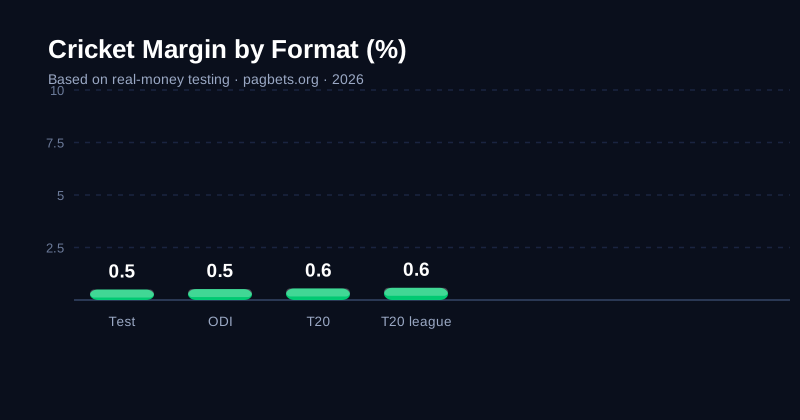
T20 is cricket's most volatile format — and its most popular betting market. Upsets are frequent, so prices carry wider margins and offer more room for informed bettors. The structural edges: powerplay and death-over pricing (the market underweights death-overs specialists), six-hitting markets (boundary size and batting depth are public data, poorly priced), and match-up knowledge — specific bowlers versus specific batters, which T20's repetition makes genuinely predictive. Our IPL guide goes deeper on the biggest T20 league.
The Discipline Layer
Cricket's calendar never stops — Tests, ODIs and T20s run year-round across the globe — so discipline is the final edge. Pick your formats (most serious cricket bettors specialise in one), flat-bet 1–2% of bankroll, cap live bets per session, and log every bet with the pitch and toss noted. The bankroll system applies unchanged — cricket's volume makes sloppy staking expensive.