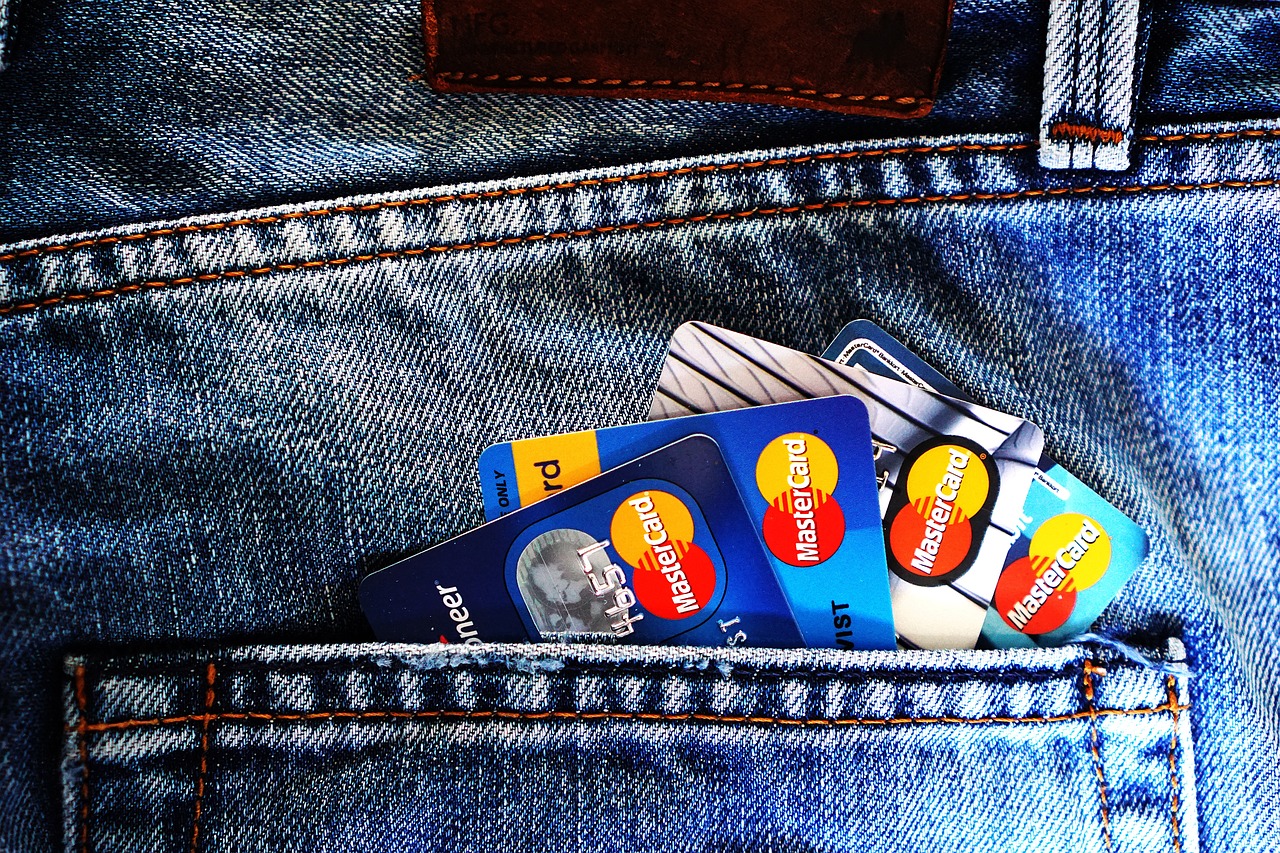
Why the Country Decides More Than the Operator
The most common misunderstanding in European betting payments is treating it as a property of the bookmaker. It is not. Whether a method works is mostly a property of domestic payment infrastructure, banking norms and, in several countries, the regulator's rules on deposit limits.
Consider PayPal. It works at a reasonable number of Dutch, Irish and Italian books, is restricted at several German operators, and is close to absent across French books because local card and voucher schemes dominate there. Consider the bank transfer, the near-universal fallback because it is a rail rather than a service. Consider the retail voucher, strong in France, Italy and parts of Spain and gone almost everywhere else.
None of this is the bookmaker being awkward. These are the rails available, and the routes that survive regulatory scrutiny, in each country. Our European payment methods guide covers the mechanism of each route — how a voucher codes, why a bank transfer needs the reference field, how an e-wallet descriptor affects visibility. This article is the map: which of them works where.
The Country Matrix
Acceptance varies by market and by operator within it. Treat this as a starting point and verify before depositing.
| Country | Cards | E-wallets | Bank transfer | Retail voucher | Notes |
|---|---|---|---|---|---|
| United Kingdom | Excellent | Excellent | Good | None | Open banking common; GamCare-linked limits |
| Ireland | Excellent | Excellent | Good | None | Visa and Mastercard dominate |
| Netherlands | Good | Good | Good | None | Strict KSA regime; low deposit ceiling |
| Germany | Restricted | Limited | Good | None | State licences; many routes blocked |
| Spain | Good | Good | Good | Good | Cards usually need to be Spanish-issued |
| Italy | Good | Good | Good | Good | Sisal and Lottomatica networks strong |
| France | Good | Limited | Good | Excellent | Cards often need 3D Secure |
| Sweden | Good | Good | Good | Limited | ATG licence; Spelpauset limits apply |
| Denmark | Good | Good | Good | None | Small market, high card acceptance |
| Portugal | Good | Limited | Good | None | Regulator blocks some offshore operators |
Cards: Universal, Limited and Increasingly Blocked
Cards remain the default because they work nearly everywhere and settle instantly. They also carry the most friction, and the friction has grown every year.
The first issue is the issuer. A growing share of European cards ship with gambling blocked by default, particularly prepaid and business cards, and a further share of issuers decline gambling transactions under their general risk policy. Neither is negotiable with the bookmaker; both are settled before the request reaches it. Our licensing guide explains why books now run heavy automated declines on cards, which follows from anti-fraud and anti-money-laundering rules rather than from policy preference.
The second is country matching. Spanish operators in practice require a Spanish-issued card because mismatched issuing countries correlate with cross-border fraud, and several French books apply the same rule. A UK card at a French operator may work once and then be blocked after the first deposit, which is a poor way to find out.
The third is limits. Visa and Mastercard raised the default online gambling limit in many European markets in recent years, and issuers now impose their own daily and monthly caps on top. If a deposit is refused at 500 currency units, check your issuer's gambling cap first. The practical response is to use a card whose limits you can raise, confirm the block status before depositing, and keep a second funded method so one declined card does not stop you. The bookmaker selection guide is where to check whether a specific operator accepts your method.
E-Wallets: The Workhorse, With One Important Catch
E-wallets are the most useful general-purpose method in European betting for three reasons: they are fast, they carry a neutral statement descriptor in most cases, and they bypass card gambling blocks because the merchant is a payment institution rather than a betting operator.
That third point is the catch. An e-wallet deposit appears on your bank statement as a transfer to a payment provider, which is genuinely useful if you want discretion and unhelpful if your bank blocks payment providers known for gambling. Several European banks maintain lists of such providers, and the descriptor on your statement usually makes it obvious which one was used.
Skrill and Neteller remain the two most widely accepted across European books, with PayPal accepted at a meaningful but smaller subset and a long tail of regional methods at a handful of operators. Availability is uneven and changes, so treat any list as out of date within a few months.
The rule that catches people is the withdrawal condition. Nearly every European book requires withdrawals to return to the method used for the deposit, so a bonus used on an e-wallet is withdrawable only to that e-wallet and a bank transfer bonus only by transfer. That is fine until you close the e-wallet, at which point the balance is genuinely stuck. The methods guide covers this properly, and it is the most common cause of an unrecoverable balance.
The Withdrawal Is Where Payment Problems Appear
Deposits fail on the banking side; withdrawals fail on the operator's side. Know the four failure modes before you deposit.
Bank Transfer: Slow, Reversible and Unlimited
The bank transfer is the least glamorous method and the one that solves the two problems the others cannot.
It has no card limit, because it is not a card transaction. A transfer of several thousand currency units is unremarkable at the bank level in most European markets. And because it is a push rather than a pull, the bookmaker cannot decline it on a fraud rule the way it can decline a card.
The costs are speed and convenience. A standard SEPA credit transfer takes up to two working days, which hurts if you want to use a price before it moves. Some books now support SEPA Instant and credit within minutes. Books also frequently require the account name on the IBAN to match the betting account, which closes off the informal shared-bank-account routes that were common years ago.
For anything above roughly 1,000 currency units the bank transfer is the sensible default. Below that it is usually not worth the wait. Our cross-border strategy guide covers the separate question of which methods exist at all in each jurisdiction.
Vouchers: Strong in Three Countries, Gone in Most
Retail betting vouchers are the clearest example of a payment method being a property of the country rather than the operator.
They work well where the retail lottery network is strong, which in practice means France, Italy and parts of Spain. In France the network around the(tabac press and Casino retailers) is extensive and several books have built voucher deposit flows around it. In Italy the Sisal and Lottomatica networks carry a large share of retail deposits. In Spain it survives in some regions and has shrunk considerably.
They have largely disappeared from the UK, Ireland, the Netherlands, Germany and the Nordic markets, where retail shops did not have the same presence or the economics never supported it.
They are also increasingly restricted on purpose. Regulators have treated prepaid vouchers as a route around deposit limits, and several markets now cap voucher deposits explicitly or exclude them from promotional terms. A voucher can therefore be accepted as a deposit method and simultaneously unusable for the welcome offer, which is maddening and entirely common. Two practical warnings: the code is single-use and non-refundable, so mistyping it is unrecoverable, and the commission is embedded in the price at roughly 3% to 6% of face value, materially worse than a card or a wallet.
Method Comparison on Cost and Speed
The numbers that decide it in practice, before you get to which countries accept what.
| Method | Speed | Typical fee | Max practical amount | Main failure mode |
|---|---|---|---|---|
| Debit card | Instant | None | Issuer limit, often 500-2,000 | Issuer blocks gambling |
| Bank transfer | 1-2 working days | None to 5 | Very high | IBAN name mismatch |
| E-wallet | Instant | 0-2% on conversion | Wallet and book limits | Withdrawal must match deposit |
| Retail voucher | Instant | 3-6% of face value | 100-200 per voucher | Single-use, often promo-excluded |
| Prepaid card | Instant | Activation fee | Low | Unused balance expires |
| Apple Pay and Google Pay | Instant | None | Card underlying limit | Card gambling block still applies |
Choosing a Method for Your Situation
Three questions, and the answer takes under a minute.
How much are you depositing? Under 100 currency units, a card or an e-wallet, because speed matters most at that size. Between 100 and 1,000, an e-wallet where one is accepted, because it avoids card blocks. Above 1,000, a bank transfer, because no issuer limit will stop it.
Do you need the balance back quickly? If yes, a card or an e-wallet, and never a voucher. A voucher cannot be withdrawn at all; it is a deposit in a different form.
Will you take a promotional offer? Check the terms for a deposit-method restriction before depositing, because the restriction is nearly always there and rarely prominent. The free bets guide covers the promotion side, and this is where the two subjects meet: the method you choose can disqualify the offer you wanted.
One general piece of advice that fits the bookmaker question as much as the payment one. Deposit small first. Every operator should process a small test withdrawal without argument, and the ones that will not are telling you something important before you commit real money. The responsible betting tools guide covers deposit limits, which are worth setting the moment the account works rather than after.
The Summary
Cards are universal and increasingly blocked. E-wallets are the fastest general option and the one most likely to cause a withdrawal mismatch. Bank transfers are slow, unlimited and boring, which makes them the right answer for larger sums. Vouchers are a French, Italian and Spanish phenomenon carrying an embedded commission and no withdrawal route. Start with a small test withdrawal rather than a large deposit, and check the promotion terms before you pick the method.
✓ What We Like
- Tells you how to check a licence rather than asking you to trust one
- Covers the payment problem that decides whether the product is usable for you
- Uses named regulators, laws and figures rather than general description
✕ What Could Improve
- Applies to one jurisdiction, so it does not transfer to your market
- A limit or ceiling constrains how much you can actually stake