
The Most Popular Bet in Football — And Its Hidden Tax
Bet builders have become the fastest-growing product in football betting: combine the result, goals, corners, cards and scorers from one match into a single bet with multiplied odds. The format is genuinely fun — and structurally overpriced. Because builder selections come from the same match, they're correlated (a team winning 3–0 makes over 2.5 goals far more likely than the individual prices suggest), and the bookmaker prices that correlation against you. This guide explains the tax, where it hides, and when builders are worth using anyway.

The Pricing: Why Combined Odds Shrink
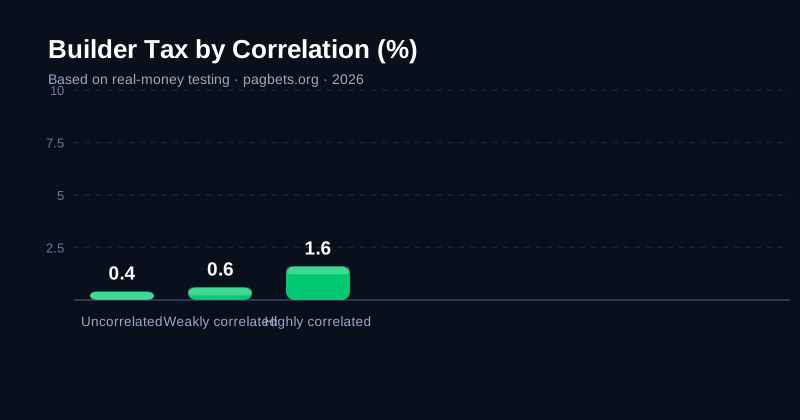
The mechanics: a builder multiplies your selections' odds, then applies an additional correlation adjustment on top of the normal margin. Example: team to win at 1.80 and over 2.5 goals at 1.90 should multiply to 3.42 — but the builder offers 3.20, because wins and goals correlate. The adjustment is the builder's real price, and it grows with every correlated selection you add. Two uncorrelated selections (opposition corners + home team cards) carry a smaller tax; three correlated ones carry a large one.
| Builder example | Independent product | Builder price | Tax |
|---|---|---|---|
| Home win + over 2.5 (correlated) | 3.42 | ~3.20 | ~6% |
| Corners + cards (weakly correlated) | 4.50 | ~4.30 | ~4% |
| Win + goals + scorer (highly correlated) | 8.10 | ~6.80 | ~16% |
Where the Correlation Traps Hide
Three correlation traps account for most builder overpayments. Win + goals: the classic — winners score goals, so the double costs more than it looks. Scorer + result: betting a striker to score and his team to win is nearly the same bet twice. Team totals + match totals: home over 1.5 plus over 2.5 overlap heavily. The builder's attraction — piling related selections into one exciting ticket — is exactly where the tax concentrates. Uncorrelated builder selections (different teams' cards, corners with goals) are where the gap shrinks toward fairness.

When Builders Are Worth It
Three legitimate uses survive the maths. Promotions: builder-specific boosts (10–30% profit increases) and insurance (stake back if one leg loses) frequently tip the combined value positive — these are the builder's real golden moments, and they're advertised weekly. Weakly correlated builds: corners and cards combinations carry the smallest tax and let you express genuine research. Entertainment: a small-stake builder on your team's match is priced fun — accept the tax as the ticket price. As a serious staking vehicle, builders lose to the same selections placed separately.
- Promotional boosts and builder insurance — often genuinely positive value
- Weakly correlated builds (corners, cards, unrelated markets)
- Small-stake entertainment on matches you're watching anyway
The Builder Strategy Summary
The complete builder strategy in four rules: check the independent product before confirming (the gap is the tax); keep builds to 2–3 selections (the tax compounds with each addition); prefer weakly correlated selections; and jump on promotions where the boost or insurance exceeds the tax. Pair builders with the discipline in our acca guide and the bankroll rules, and the format becomes what it should be — occasional fun, occasionally subsidised.