
The Most Researchable Sport in Betting
Darts is the betting market nobody talks about and research bettors quietly love. Every televised match publishes the numbers that decide it — three-dart averages, doubles percentages, checkout rates, 180 counts — and the markets are priced by smaller teams than the football giants, leaving genuine inefficiencies. Add a year-round calendar and matches short enough to watch completely, and darts becomes one of the few sports where an amateur with a spreadsheet can find real value. This guide explains the markets and the numbers.

The Core Markets
Match winner: the most liquid market, driven by the averages gap. Handicap (legs): the favourite gives legs — the sport's best value market, because tight legs are decided by doubles, not scoring. Total 180s: maximums per match, driven by treble-20 consistency and leg count. Total legs: the over/under of a best-of format. Checkout markets: which double finishes the match — the deepest research market, rewarding players who track checkout preferences. Each market answers to a different stat, which is what makes darts so cleanly researchable.
| Market | Driving stat | Research depth |
|---|---|---|
| Match winner | Three-dart average gap | Moderate |
| Leg handicap | Doubles/checkout percentage | Deep |
| Total 180s | Treble-20 consistency × legs | Deep |
| Checkout double | Player checkout preferences | Specialist |
The Three Numbers That Decide Matches
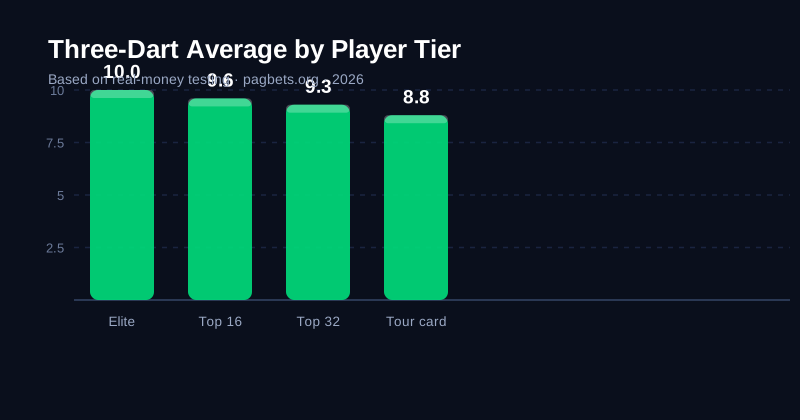
Three public statistics drive almost every darts bet. Three-dart average: the scoring engine — the batting average of darts, and the first number to check. Doubles percentage: legs are won on doubles, not scoring; a 45% checkout player wins tight legs against a 30% scorer averaging ten points higher. 180 rate: treble-20 consistency, the direct input to 180s markets. Track all three over a player's last ten matches, not their season — darts form swings fast and the market lags the swing.

Format Awareness: Sets vs Legs, Long vs Short
Darts formats change the maths. Long set-play formats (World Championship) favour the stronger scorer — variance evens out over more legs. Short formats (floor events, best of 11) favour whoever starts fast — upsets spike, and underdogs become playable. The same player can be a handicap gift in long formats and a fade in short ones. Always check the format before betting, and adjust your staking to the variance it carries.
Live Darts: The Break Window
Live darts offers the cleanest betting rhythm in sport: play stops for breaks between legs and sets, giving you natural windows to assess averages and momentum. The pattern to exploit: a player scoring well but missing doubles is a live fade in the leg market — the checkout numbers catch up with the scoreboard. Bet between legs only, cap live bets per match, and follow the psychology rules — darts turns are fast, and impulsive live betting loses fast.
Getting Started With Darts Betting
Pick the PDC tour, follow one tournament's stats without betting, and build a simple spreadsheet: last-ten averages, doubles percentage, 180 rate. Then paper-trade handicap and 180s markets for two events before staking. Open accounts at two bookmakers from our rankings, flat-bet 1–2% of bankroll, and let the spreadsheet argue with the market. Darts rewards exactly this discipline — it's the smallest serious sport in betting, and the least efficiently priced.